Gone the three ancient ladies
Who creaked on the greenhouse ladders,
Reaching up white strings
To wind, to wind
The sweet-pea tendrils, the smilax,
Nasturtiums, the climbing
Roses, to straighten
Carnations, red
Chrysanthemums; the stiff
Stems, jointed like corn,
They tied and tucked, –
These nurses of nobody else.
Quicker than birds, they dipped
Up and sifted the dirt;
They sprinkled and shook;
They stood astride pipes,
Their skirts billowing out wide into tents,
Their hands twinkling with wet;
Like witches they flew along rows
Keeping creation at ease;
With a tendril for needle
They sewed up the air with a stem;
They teased out the seed that the cold kept asleep, –
All the coils, loops, and whorls.
They trellised the sun; they plotted for more than themselves.

I remember how they picked me up, a spindly kid,
Pinching and poking my thin ribs
Till I lay in their laps, laughing,
Weak as a whiffet;
Now, when I’m alone and cold in my bed,
They still hover over me,
These ancient leathery crones,
With their bandannas stiffened with sweat,
And their thorn-bitten wrists,
And their snuff-laden breath blowing lightly over me in my first sleep.

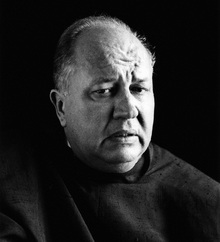
Theodore Roethke, 1908-1963 – “Frau Bauman, Frau Schmidt, & Frau Schwartze” from Collected Poems


Discover more from Tim Miller

Subscribe to get the latest posts to your email.

4 responses

  1. oh that’s lovely. “Fist sleep” really? omg

    Liked by 1 person

  2. yikes that’s an unfortunate typo. I fixed that…. Roethke has really wonderful poems about his childhood

    Like

  3. HOLY COW I am totally stealing it. I thought “fist sleep” was the way we curl up, draw ourselves in as children sleeping.

    I’m stealing it. Don’t anyone else steal it! 🙂

    Liked by 1 person

  4. Let it be known that “fist of sleep” is a phrase that only Mr Tom Hart can use. Anyone else attempting to use it will be fined.

    Like

Leave a Reply

This site uses Akismet to reduce spam. Learn how your comment data is processed.

#230 – The mythology of the bear, and Byron gets apocalyptic Human Voices Wake Us

An episode from 5/18/26: Tonight I read about the bear in folklore and mythology from two books everybody should have on their shelves: the Taschen Book of Symbols and the Penguin Dictionary of Symbols. Browsing through either puts you in contact with our best stories and, with the Taschen book, some of our best artwork.Next, I read Lord Byron’s (1788-1824) apocalyptic poem Darkness from 1816. You can read more about the volcanic eruption that inspired poem, and produced the “year without summer,” here.Finally, I read a few passages on revelation and the religious experience from the rabbi, theologian and civil rights activist Abraham Joshua Heshel’s (1907-1962) God in Search of Man: A Philosophy of Judaism.The best way to support the podcast is by leaving a review on Apple or Spotify, sharing it with others, or sending me a note on what you think. You can also order any of my books: Time and the River: From Columbine to the Invention of Fire, Notes from the Grid, To the House of the Sun, The Lonely Young & the Lonely Old, and Bone Antler Stone. I've also edited a handful of books in the S4N Pocket Poems series. I also have a YouTube channel where I share poems and excerpts from these books, mostly as YouTube shorts.Email me at humanvoiceswakeus1@gmail.com.
  1. #230 – The mythology of the bear, and Byron gets apocalyptic
  2. #229 : Mother Earth and myths of mining and agriculture
  3. #228 – What Ted Bundy did on July 14, 1974
  4. #227 – The Great Fire of London and the destruction of Jerusalem
  5. #226: The Vitality and terror of cities
  6. #225 – The invention of the wheel, and the power of storytelling
  7. #224: Let's talk about William Blake
  8. #223 – How to write two novels at the same time, with Charles Dickens
  9. #222: Seamus Heaney – 10 Essential Poems
  10. #221: Volcanoes, Plagues & the Childhood of a Kabbalist

Discover more from Tim Miller

Subscribe now to keep reading and get access to the full archive.

Continue reading