Around the year 627, when King Edwin of Northumbria and his advisors were discussing the possibility of converting to Christianity, one of them replied this way:

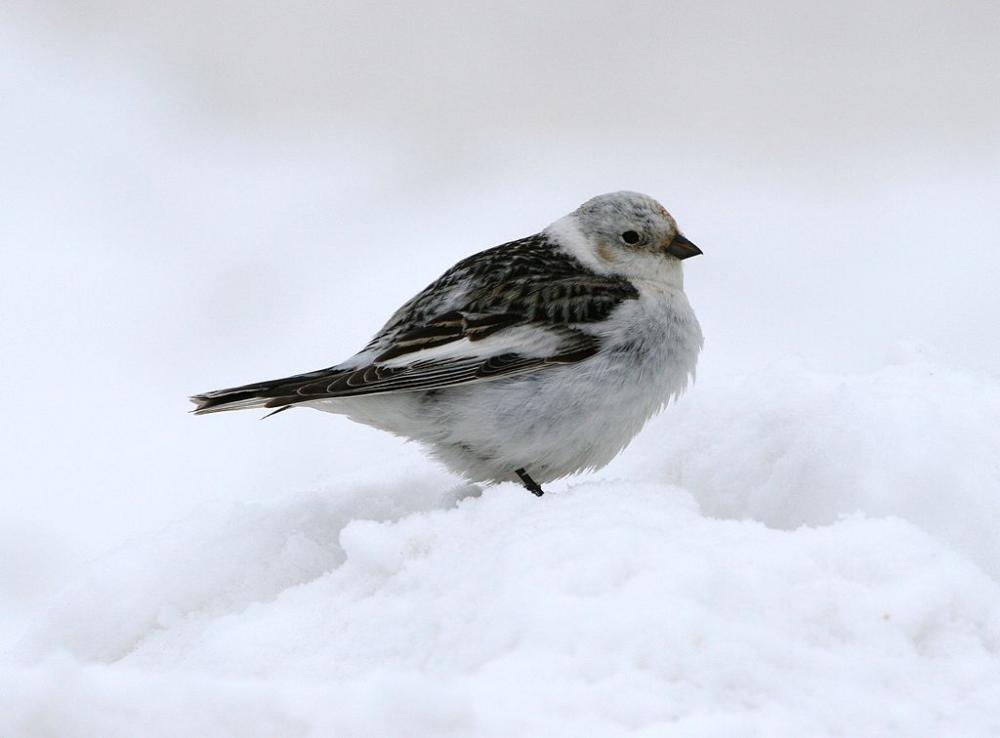
Your Majesty, when we compare the present life of man on earth with that time of which we have no knowledge, it seems to me like the swift flight of a single sparrow through the banqueting-hall where you are sitting at dinner on a winter’s day with your thegns and counselors. In the midst there is a comforting fire to warm the hall; outside, the storms of winter rain or snow are raging. This sparrow flies swiftly in through one door of the hall, and out through another. While he is inside, he is safe from the winter storms; but after a few moments of comfort, he vanishes from sight into the wintry world from which he came. Even so, man appears on earth for a little while; but of what went before this life or of what follows, we know nothing. Therefore, if this new teaching has brought any more certain knowledge, it seems only right that we should follow it.

– Bede, Ecclesiastical History of the English People, book 2, ch. 13
translated by D. H. Farmer, 129-130
Read the other Great Myths here


Discover more from Tim Miller

Subscribe to get the latest posts to your email.

#222: Seamus Heaney – 10 Essential Poems Human Voices Wake Us

An episode from 8/25/23: Tonight, I read ten essential poems from one of the great and most public poets of the last seventy years, Seamus Heaney (1939-2013). It isn’t hard to come by details of Heaney’s life, but ⁠Stepping Stones⁠ (where Heaney is interviewed at length in what amounts to an autobiography), is a good place to start. His poems are collected in ⁠100 Poems⁠, and in the ⁠individual collections⁠.There are many ways to look at Heaney’s work, and the ten poems I choose only present one picture: a poet as at home on the farm as he was at Harvard; as interested in literary history as in archaeology and the deep interior of the Irish imagination; as concerned with childhood, memory, and family as with the darkest aspects of human life. In introducing these poems, I reflect on Heaney’s importance in my own life, and the huge impact his death had on me, ten years ago this month.The poems I read are:  Personal Helicon (Death of a Naturalist, 1966)The Forge and Bogland (Door into the Dark, 1969)The Tollund Man (Wintering Out, 1972)The Strand at Lough Beg (Field Work, 1979)Squarings #2, #8, #40 (Seeing Things, 1991)from his translations of Beowulf (1999)Uncoupled (Human Chain, 2010)  The episode ends with Heaney's reading of "The Tollund Man."The best way to support the podcast is by leaving a review on Apple or Spotify, sharing it with others, or sending me a note on what you think. You can also order any of my books: Time and the River: From Columbine to the Invention of Fire, Notes from the Grid, To the House of the Sun, The Lonely Young & the Lonely Old, and Bone Antler Stone. I've also edited a handful of books in the S4N Pocket Poems series. I also have a YouTube channel where I share poems and excerpts from these books, mostly as YouTube shorts. Email me at humanvoiceswakeus1@gmail.com.
  1. #222: Seamus Heaney – 10 Essential Poems
  2. #221: Volcanoes, Plagues & the Childhood of a Kabbalist
  3. #220: The working poor and a so-so murder show
  4. #219: When a paragraph changes your life
  5. #218: Poetry to Live By
  6. #217: Voices from 1900-1914
  7. #216: Poets, Prophets, Seeresses & Goddesses from Time & the River
  8. #215: 8 Favorite Poems from "Time and the River"
  9. #214: Two of the Best Poems You've Never Heard of (by William Cullen Bryant)
  10. #213: Van Gogh's Early Years

Discover more from Tim Miller

Subscribe now to keep reading and get access to the full archive.

Continue reading