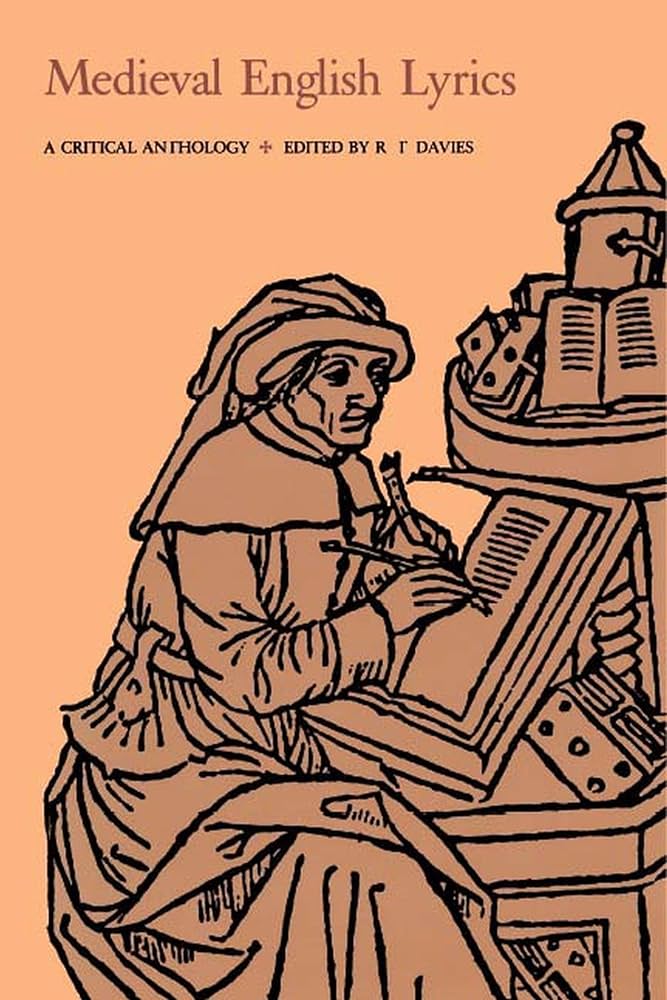
Thanks to everyone who has been reading and commenting on the Daily Poems. It takes a few months to work backward from twentieth century poems to some of the earliest English verse. Dating to the year 1250 or so, today's poem is the last from this round; tomorrow, we will swing back to the twentieth century and work backwards again. Please keep commenting, sharing, and suggesting other poems and poets to include. 

How death comes
Wanne mine eyhnen misten,
And mine heren sissen,
And my nose coldet,
And my tunge foldet,
And my rude slaket,
And mine lippes blaken,
And my muth grennet,
And my spotel rennet,
And mine her riset,
And mine herte griset,
And mine honden bivien,
And mine fet stivien –
All to late! all to late!
Wanne the bere is ate gate.

When my eyes get misty, and my ears are full of hissing, and my nose gets cold, and my tongue folds, and my face goes slack, and my lips blacken, ana my mouth grins, and my spittle runs, and my hair rises, and my heart trembles, and my hands shake, and my feet stiffen – all too late! When the bier is at the gate.

Thanne I schel flutte,
From bedde to flore,
From flore to here,
From here to bere,
From bere to putte,
And the putt fordut.
Thanne lyd mine hus uppe mine nose.
Of al this world ne give I it a pese!

Then I shall pass from bed to floor, from floor to shroud, from shroud to bier, from bier to grave, and the grave will be closed up. Then my house rests on my nose. I don’t care one jot for the whole world.


– from Medieval English Lyrics


Discover more from Tim Miller

Subscribe to get the latest posts to your email.

One response

Leave a Reply

This site uses Akismet to reduce spam. Learn how your comment data is processed.

#230 – The mythology of the bear, and Byron gets apocalyptic Human Voices Wake Us

An episode from 5/18/26: Tonight I read about the bear in folklore and mythology from two books everybody should have on their shelves: the Taschen Book of Symbols and the Penguin Dictionary of Symbols. Browsing through either puts you in contact with our best stories and, with the Taschen book, some of our best artwork.Next, I read Lord Byron’s (1788-1824) apocalyptic poem Darkness from 1816. You can read more about the volcanic eruption that inspired poem, and produced the “year without summer,” here.Finally, I read a few passages on revelation and the religious experience from the rabbi, theologian and civil rights activist Abraham Joshua Heshel’s (1907-1962) God in Search of Man: A Philosophy of Judaism.The best way to support the podcast is by leaving a review on Apple or Spotify, sharing it with others, or sending me a note on what you think. You can also order any of my books: Time and the River: From Columbine to the Invention of Fire, Notes from the Grid, To the House of the Sun, The Lonely Young & the Lonely Old, and Bone Antler Stone. I've also edited a handful of books in the S4N Pocket Poems series. I also have a YouTube channel where I share poems and excerpts from these books, mostly as YouTube shorts.Email me at humanvoiceswakeus1@gmail.com.
  1. #230 – The mythology of the bear, and Byron gets apocalyptic
  2. #229 : Mother Earth and myths of mining and agriculture
  3. #228 – What Ted Bundy did on July 14, 1974
  4. #227 – The Great Fire of London and the destruction of Jerusalem
  5. #226: The Vitality and terror of cities
  6. #225 – The invention of the wheel, and the power of storytelling
  7. #224: Let's talk about William Blake
  8. #223 – How to write two novels at the same time, with Charles Dickens
  9. #222: Seamus Heaney – 10 Essential Poems
  10. #221: Volcanoes, Plagues & the Childhood of a Kabbalist

Discover more from Tim Miller

Subscribe now to keep reading and get access to the full archive.

Continue reading