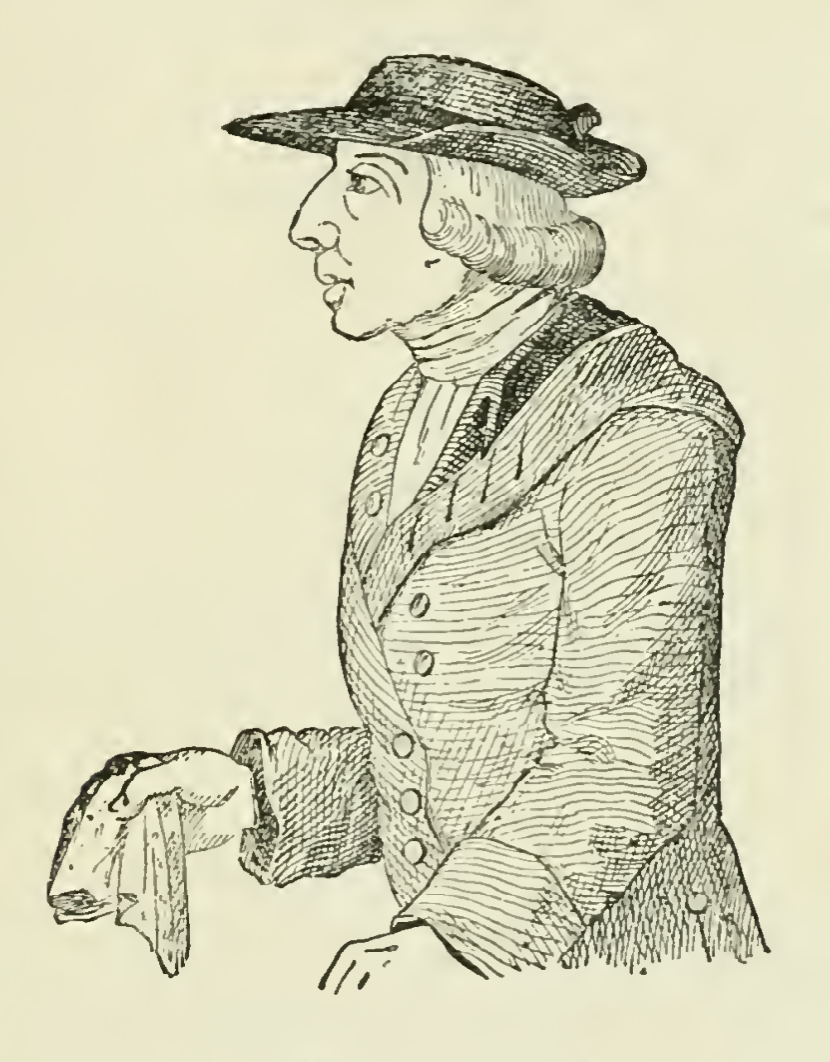
In the barn the tenant cock,
Close to partlet perched on high,
Briskly crows (the shepherd’s clock!),
Jocund that the morning's nigh.

Swiftly from the mountain’s brow,
Shadows, nursed by night, retire:
And the peeping sunbeam now
Paints with gold the village spire.

Philomel forsakes the thorn,
Plaintive where she prates at night;
And the lark, to meet the morn,
Soars beyond the shepherd’s sight.

From the low-roofed cottage ridge,
See the chatt’ring swallow spring;
Darting through the one-arched bridge,
Quick she dips her dappled wing.

Now the pine-tree’s waving top
Gently greets the morning gale:
Kidlings now begin to crop
Daisies on the dewy dale.

From the balmy sweets, uncloyed
(Restless till her task be done),
Now the busy bee's employed
Sipping dew before the sun.

Trickling through the creviced rock,
Where the limpid stream distils,
Sweet refreshment waits the flock
When ’tis sun-drove from the hills.

Colin’s for the promised corn
(Ere the harvest hopes are ripe)
Anxious; – whilst the huntsman’s horn,
Boldly sounding, drowns his pipe.

Sweet, O sweet, the warbling throng
On the white emblossomed spray!
Nature’s universal song
Echoes to the rising day.

John Cunningham, 1729-1773 – “Morning” from The New Oxford Book of Eighteenth-Century Verse


Discover more from Tim Miller

Subscribe to get the latest posts to your email.

One response

  1. I wasn’t thinking of the dawn chorus to start with and with the urban setting and the cock the first call it is not, but that is what I am left with. It is not us, people but nature anyway and a wonderful way to evoke it.

    Like

Leave a Reply

This site uses Akismet to reduce spam. Learn how your comment data is processed.

#226: The Vitality and terror of cities Human Voices Wake Us

An episode from 4/20/26: Tonight, we delve into the world of cities. First, in a passage from Sam Quinones’s Dreamland: The True Tale of America’s Opiate Epidemic, the town of Portsmouth, Ohio, is lovingly described in the decades before the epidemic.Next, a passage from Ben Wilson’s Metropolis: A History of the City, Humankind’s Great Invention describes the author’s travels to research the book, and his conclusion that the messiness of urban life is key to its vitality and innovation.Finally, I read letters from twentieth-century Jewish immigrants to New York City. Originally published in the Jewish Daily Forward and later collected in The Bintel Brief, the letters describe the difficulties faced by newly arrived immigrants who had rarely (if ever) experienced life outside of the insular world of shtetl.    The best way to support the podcast is by leaving a review on Apple or Spotify, sharing it with others, or sending me a note on what you think. You can also order any of my books: Time and the River: From Columbine to the Invention of Fire, Notes from the Grid, To the House of the Sun, The Lonely Young & the Lonely Old, and Bone Antler Stone. I've also edited a handful of books in the S4N Pocket Poems series. I also have a YouTube channel where I share poems and excerpts from these books, mostly as YouTube shorts.Email me at humanvoiceswakeus1@gmail.com.
  1. #226: The Vitality and terror of cities
  2. #225 – The invention of the wheel, and the power of storytelling
  3. #224: Let's talk about William Blake
  4. #223 – How to write two novels at the same time, with Charles Dickens
  5. #222: Seamus Heaney – 10 Essential Poems
  6. #221: Volcanoes, Plagues & the Childhood of a Kabbalist
  7. #220: The working poor and a so-so murder show
  8. #219: When a paragraph changes your life
  9. #218: Poetry to Live By
  10. #217: Voices from 1900-1914

Discover more from Tim Miller

Subscribe now to keep reading and get access to the full archive.

Continue reading