For Jane Dewey, Maryland

Nothing is so beautiful as spring. – Hopkins

A cold spring:
the violet was flawed on the lawn.
For two weeks or more the trees hesitated;
the little leaves waited,
carefully indicating their characteristics.
Finally a grave green dust
settled over your big and aimless hills.
One day, in a chill white blast of sunshine,
on the side of one a calf was born.
The mother stopped lowing
and took a long time eating the after-birth,
a wretched flag,
but the calf got up promptly
and seemed inclined to feel gay.

The next day
was much warmer.
Greenish-white dogwood infiltrated the wood,
each petal burned, apparently, by a cigarette-butt;
and the blurred redbud stood
beside it, motionless, but almost more
like movement than any placeable color.
Four deer practised leaping over your fences.
The infant oak-leaves swung through the sober oak.
Song-sparrows were wound up for the summer,
and in the maple the complementary cardinal
cracked a whip, and the sleeper awoke,
stretching miles of green limbs from the south.
In his cap the lilacs whitened,
then one day they fell like snow.

Now, in the evening,
a new moon comes.
The hills grow softer. Tufts of long grass show
where each cow-flop lies.
The bull-frogs are sounding,
slack strings plucked by heavy thumbs.
Beneath the light, against your white front door,
the smallest moths, like Chinese fans,
flatten themselves, silver and silver-gilt
over pale yellow, orange, or gray.
Now, from the thick grass, the fireflies
begin to rise:
up, then down, then up again:
lit on the ascending flight,
drifting simultaneously to the same height,
– exactly like the bubbles in champagne.
– Later on they rise much higher.
And your shadowy pastures will be able to offer
these particular glowing tributes
every evening now throughout the summer.

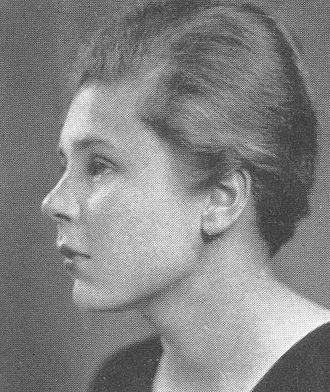
Elizabeth Bishop, 1911-1979 – “A Cold Spring” from Poems


Discover more from Tim Miller

Subscribe to get the latest posts to your email.

Leave a Reply

This site uses Akismet to reduce spam. Learn how your comment data is processed.

#225 – The invention of the wheel, and the power of storytelling Human Voices Wake Us

An episode from 4/13/26: Tonight, I read about the invention of the wheel and what it meant for the earliest communities of Europe and the Eurasian steppes, from David Anthony’s The Horse, the Wheel, and Language.After this, a few passages from Norman Longmate’s How We Lived Then: A History of Everyday Life During the Second World War tells the story of gasoline rationing in England during the war, and the sometimes-comical lengths people went to hoard the fuel they could get a hold of.Finally, passages from S. Y. Agnon’s Days of Awe: A Treasury of Jewish Wisdom for Reflection, Repentance, and Renewal on the High Holy Days and Gershom Scholem’s Major Trends in Jewish Mysticism illustrate the power of language and storytelling in the Jewish tradition.The best way to support the podcast is by leaving a review on Apple or Spotify, sharing it with others, or sending me a note on what you think. You can also order any of my books: Time and the River: From Columbine to the Invention of Fire, Notes from the Grid, To the House of the Sun, The Lonely Young & the Lonely Old, and Bone Antler Stone. I've also edited a handful of books in the S4N Pocket Poems series. I also have a YouTube channel where I share poems and excerpts from these books, mostly as YouTube shorts.Email me at humanvoiceswakeus1@gmail.com.
  1. #225 – The invention of the wheel, and the power of storytelling
  2. #224: Let's talk about William Blake
  3. #223 – How to write two novels at the same time, with Charles Dickens
  4. #222: Seamus Heaney – 10 Essential Poems
  5. #221: Volcanoes, Plagues & the Childhood of a Kabbalist
  6. #220: The working poor and a so-so murder show
  7. #219: When a paragraph changes your life
  8. #218: Poetry to Live By
  9. #217: Voices from 1900-1914
  10. #216: Poets, Prophets, Seeresses & Goddesses from Time & the River

Discover more from Tim Miller

Subscribe now to keep reading and get access to the full archive.

Continue reading