I have to go back into the forge room
at Chevy where Lonnie still calls
out his commands to Sweet Pea and Packy
and stare into the fire
until my eyes are also fire
and tear away some piece of my face
because we’re all burning in the blood
and it’s too late.
                            I have to walk
the long road from here to Bessemer,
Alabama, and arrive on a June night in ’48
after work when the men have crowded
around a stalled car and tell them
there’s no place to go and
let them take turns beating me
with hands turned to pig iron.
                                                   I have to
climb the shaking ladder to the roof
of the Nitro plant and tear off
my respirator and breathe the yellow air
the Chaldeans called “the air you must not breathe,”
and sing in the voices
of my fathers calling the children
into prayer while below the stubby canisters
pass labelled, “Chicago,” “Amsterdam,”
“Belsen,” “Toronto.”
                                  I have to swim out
into the flat waters of the great sea
at dawn when the small fishing boats
are coming in and climb aboard the one
with the face of a goddess and the tail
of a goat and let my left cheek
brush against the rough, unshaven cheek
of the old man whose tears – mixed with wine –
watered the beach twenty one years ago.
                                                                       And
keep going past the last marker
until I am lost forever, until the sea
and the sky are one, the waves have ceased,
no tide pulls us toward
the cries of the drowned.
                                            I have to climb
the slag hills again, but this time not
as a child, and look out over the river of iron,
and hold it all in my eyes,
the river, the iron mountains, the factories
where our brothers burned. I have to repeat
the prayer that we will all go back
to earth one day soon to become earth,
that our tears will run to the sea
a last time and open it, and our fires
light the way back home for someone.
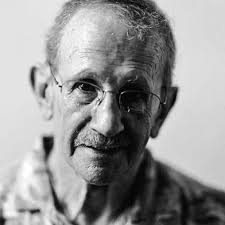
Philip Levine, 1928-2015 – “Burned” from What Work Is

Leave a Reply