How vainly men themselves amaze
To win the Palm, the Oke, or Bayes;
And their uncessant Labours see
Crown’d from some single Herb or Tree.
Whose short and narrow vergèd Shade
Does prudently their Toyles upbraid;
While all Flow’rs and all Trees do close
To weave the Garlands of repose.

Fair quiet, have I found thee here,
And Innocence thy Sister dear!
Mistaken long, I sought you then
In busie Companies of Men.
Your sacred Plants, if here below,
Only among the Plants will grow.
Society is all but rude,
To this delicious Solitude.

No white nor red was ever seen
So am’rous as this lovely green.
Fond Lovers, cruel as their Flame,
Cut in these Trees their Mistress name.
Little, Alas, they know, or heed,
How far these Beauties Hers exceed!
Fair Trees! where s’eer your barkes I wound,
No Name shall but your own be found.

When we have run our Passions heat,
Love hither makes his best retreat.
The Gods, that mortal Beauty chase,
Still in a Tree did end their race.
Apollo hunted Daphne so,
Only that She might Laurel grow.
And Pan did after Syrinx speed,
Not as a Nymph, but for a Reed.

What wond’rous Life in this I lead!
Ripe Apples drop about my head;
The Luscious Clusters of the Vine
Upon my Mouth do crush their Wine;
The Nectaren, and curious Peach,
Into my hands themselves do reach;
Stumbling on Melons, as I pass,
Insnar’d with Flow’rs, I fall on Grass.

Mean while the Mind, from pleasure less,
Withdraws into its happiness:
The Mind, that Ocean where each kind
Does streight its own resemblance find;
Yet it creates, transcending these,
Far other Worlds, and other Seas;
Annihilating all that ’s made
To a green Thought in a green Shade.

Here at the Fountains sliding foot,
Or at some Fruit-trees mossy root,
Casting the Bodies Vest aside,
My Soul into the boughs does glide:
There like a Bird it sits, and sings,
Then whets, and combs its silver Wings;
And, till prepar’d for longer flight,
Waves in its Plumes the various Light.

Such was that happy Garden-state,
While Man there walk’d without a Mate:
After a Place so pure, and sweet,
What other Help could yet be meet!
But ’twas beyond a Mortal’s share
To wander solitary there:
Two Paradises ’twere in one
To live in Paradise alone.

How well the skilful Gardner drew
Of flow’rs and herbes this Dial new;
Where from above the milder Sun
Does through a fragrant Zodiack run;
And, as it works, th’ industrious Bee
Computes its time as well as we.
How could such sweet and wholsome Hours
Be reckon’d but with herbs and flow’rs!
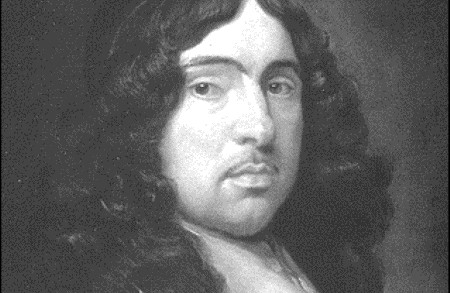
Andrew Marvell, 1621-1678 – “The Garden” from Complete Poems

Leave a Reply