                                                Was it for this
That one, the fairest of all rivers, loved
To blend his murmurs with my nurse’s song,
And from his alder shades and rocky falls,
And from his fords and shallows, sent a voice
That flowed along my dreams? For this didst thou,
O Derwent, travelling over the green plains
Near my ‘sweet birthplace’, didst thou, beauteous stream,
Make ceaseless music through the night and day,
Which with its steady cadence tempering
Our human waywardness, composed my thoughts
To more than infant softness, giving me
Among the fretful dwellings of mankind,
A knowledge, a dim earnest, of the calm
Which Nature breathes among the hills and groves?
When, having left his mountains, to the towers
Of Cockermouth that beauteous river came,
Behind my father’s house he passed, close by,
Along the margin of our terrace walk.
He was a playmate whom we dearly loved:
Oh, many a time have I, a five years’ child,
A naked boy, in one delightful rill,
A little mill-race severed from his stream,
Made one long bathing of a summer’s day,
Basked in the sun, and plunged, and basked again,
Alternate, all a summer’s day, or coursed
Over the sandy fields, leaping through groves
Of yellow grunsel; or, when crag and hill,
The woods, and distant Skiddaw’s lofty height,
Were bronzed with a deep radiance, stood alone
Beneath the sky, as if I had been born
On Indian plains, and from my mother’s hut
Had run abroad in wantonness to sport,
A naked savage, in the thunder-shower.
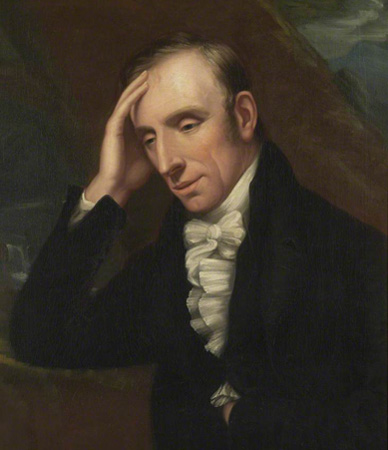
William Wordsworth, 1770-1850 – Book 1 of The Prelude from The Major Works


Leave a Reply