I am useless.
What I do is nothing,
What I think has no savour.
There is an almanac between the windows:
It is of the year when I was born.

My fellows call to me to join them,
They shout for me,
Passing the house in a great wind of vermilion banners.
They are fresh and fulminant,
They are indecent and strut with the thought of it,
They laugh, and curse, and brawl,
And cheer a holocaust of "Who comes firsts!" at the iron fronts of the houses at the two edges of the street.
Young men with naked hearts jeering between iron house-fronts,
Young men with naked bodies beneath their clothes
Passionately conscious of them,
Ready to strip off their clothes,
Ready to strip off their customs, their usual routine,
Clamouring for the rawness of life,
In love with appetite,
Proclaiming it as a creed,
Worshipping youth,
Worshipping themselves.
They call for women and the women come,
They bare the whiteness of their lusts to the dead gaze of the old house-fronts,
They roar down the street like flame,
They explode upon the dead houses like new, sharp fire.

But I –
I arrange three roses in a Chinese vase:
A pink one,
A red one,
A yellow one.
I fuss over their arrangement.
Then I sit in a South window
And sip pale wine with a touch of hemlock in it,
And think of Winter nights,
And field-mice crossing and re-crossing
The spot which will be my grave.

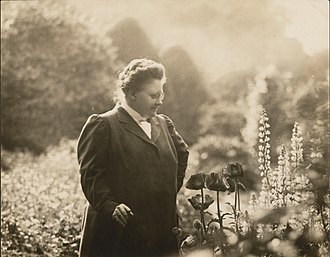
Amy Lowell, 1874-1925 – “New Heavens for Old” from Selected Poems

Discover more from Tim Miller

Subscribe to get the latest posts to your email.

Leave a Reply

This site uses Akismet to reduce spam. Learn how your comment data is processed.

#225 – The invention of the wheel, and the power of storytelling Human Voices Wake Us

An episode from 4/13/26: Tonight, I read about the invention of the wheel and what it meant for the earliest communities of Europe and the Eurasian steppes, from David Anthony’s The Horse, the Wheel, and Language.After this, a few passages from Norman Longmate’s How We Lived Then: A History of Everyday Life During the Second World War tells the story of gasoline rationing in England during the war, and the sometimes-comical lengths people went to hoard the fuel they could get a hold of.Finally, passages from S. Y. Agnon’s Days of Awe: A Treasury of Jewish Wisdom for Reflection, Repentance, and Renewal on the High Holy Days and Gershom Scholem’s Major Trends in Jewish Mysticism illustrate the power of language and storytelling in the Jewish tradition.The best way to support the podcast is by leaving a review on Apple or Spotify, sharing it with others, or sending me a note on what you think. You can also order any of my books: Time and the River: From Columbine to the Invention of Fire, Notes from the Grid, To the House of the Sun, The Lonely Young & the Lonely Old, and Bone Antler Stone. I've also edited a handful of books in the S4N Pocket Poems series. I also have a YouTube channel where I share poems and excerpts from these books, mostly as YouTube shorts.Email me at humanvoiceswakeus1@gmail.com.
  1. #225 – The invention of the wheel, and the power of storytelling
  2. #224: Let's talk about William Blake
  3. #223 – How to write two novels at the same time, with Charles Dickens
  4. #222: Seamus Heaney – 10 Essential Poems
  5. #221: Volcanoes, Plagues & the Childhood of a Kabbalist
  6. #220: The working poor and a so-so murder show
  7. #219: When a paragraph changes your life
  8. #218: Poetry to Live By
  9. #217: Voices from 1900-1914
  10. #216: Poets, Prophets, Seeresses & Goddesses from Time & the River

Discover more from Tim Miller

Subscribe now to keep reading and get access to the full archive.

Continue reading