My long two-pointed ladder’s sticking through a tree
Toward heaven still,
And there’s a barrel that I didn’t fill
Beside it, and there may be two or three
Apples I didn’t pick upon some bough.
But I am done with apple-picking now.
Essence of winter sleep is on the night,
The scent of apples: I am drowsing off.
I cannot rub the strangeness from my sight
I got from looking through a pane of glass
I skimmed this morning from the drinking trough
And held against the world of hoary grass.
It melted, and I let it fall and break.
But I was well
Upon my way to sleep before it fell,
And I could tell
What form my dreaming was about to take.
Magnified apples appear and disappear,
Stem end and blossom end,
And every fleck of russet showing clear.
My instep arch not only keeps the ache,
It keeps the pressure of a ladder-round.
I feel the ladder sway as the boughs bend.
And I keep hearing from the cellar bin
The rumbling sound
Of load on load of apples coming in.
For I have had too much
Of apple-picking: I am overtired
Of the great harvest I myself desired.
There were ten thousand thousand fruit to touch,
Cherish in hand, lift down, and not let fall.
For all
That struck the earth,
No matter if not bruised or spiked with stubble,
Went surely to the cider-apple heap
As of no worth.
One can see what will trouble
This sleep of mine, whatever sleep it is.
Were he not gone,
The woodchuck could say whether it’s like his
Long sleep, as I describe its coming on,
Or just some human sleep.

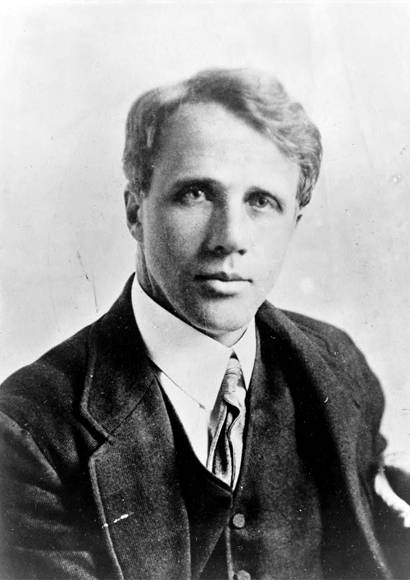
Robert Frost, 1874-1963 – “After Apple-Picking” from Collected Poems

Discover more from Tim Miller

Subscribe to get the latest posts to your email.

Leave a Reply

This site uses Akismet to reduce spam. Learn how your comment data is processed.

#225 – The invention of the wheel, and the power of storytelling Human Voices Wake Us

An episode from 4/13/26: Tonight, I read about the invention of the wheel and what it meant for the earliest communities of Europe and the Eurasian steppes, from David Anthony’s The Horse, the Wheel, and Language.After this, a few passages from Norman Longmate’s How We Lived Then: A History of Everyday Life During the Second World War tells the story of gasoline rationing in England during the war, and the sometimes-comical lengths people went to hoard the fuel they could get a hold of.Finally, passages from S. Y. Agnon’s Days of Awe: A Treasury of Jewish Wisdom for Reflection, Repentance, and Renewal on the High Holy Days and Gershom Scholem’s Major Trends in Jewish Mysticism illustrate the power of language and storytelling in the Jewish tradition.The best way to support the podcast is by leaving a review on Apple or Spotify, sharing it with others, or sending me a note on what you think. You can also order any of my books: Time and the River: From Columbine to the Invention of Fire, Notes from the Grid, To the House of the Sun, The Lonely Young & the Lonely Old, and Bone Antler Stone. I've also edited a handful of books in the S4N Pocket Poems series. I also have a YouTube channel where I share poems and excerpts from these books, mostly as YouTube shorts.Email me at humanvoiceswakeus1@gmail.com.
  1. #225 – The invention of the wheel, and the power of storytelling
  2. #224: Let's talk about William Blake
  3. #223 – How to write two novels at the same time, with Charles Dickens
  4. #222: Seamus Heaney – 10 Essential Poems
  5. #221: Volcanoes, Plagues & the Childhood of a Kabbalist
  6. #220: The working poor and a so-so murder show
  7. #219: When a paragraph changes your life
  8. #218: Poetry to Live By
  9. #217: Voices from 1900-1914
  10. #216: Poets, Prophets, Seeresses & Goddesses from Time & the River

Discover more from Tim Miller

Subscribe now to keep reading and get access to the full archive.

Continue reading