I see her against the pearl sky of Dublin
Before the turn of the century, a young woman
With all those brothers and sisters, green eyes, hair
She could sit on; for high life, a meandering sermon

(Church of Ireland) each Sunday, window-shopping
In Dawson Street, picnics at Killiney and Howth …
To know so little about the growing of one
Who was angel and maid-of-all-work to my growth!

– Who, her sister dying, took on the four-year
Child, and the chance that now she would never make
A child of her own; who, mothering me, flowered in
The clover-soft authority of the meek.

Who, exiled, gossiping home chat from abroad
In roundhand letters to a drift of relations –
Squires’, Goldsmiths, Overends, Williams’ – sang the songs
Of Zion in a strange land. Hers the patience

Of one who made no claims, but simply loved
Because that was her nature, and loving so
Asked no more than to be repaid in kind.
If she was not a saint, I do not know

What saints are … Buying penny toys at Christmas
(The most a small purse could afford) to send her
Nephews and nieces, she’d never have thought the shop
Could shine for me one day in Bethlehem splendour.

Exiled again after ten years, my father
Remarrying, she faced the bitter test
Of charity – to abdicate in love’s name
From love’s contentful duties. A distressed

Gentle woman housekeeping for strangers;
Later, companion to a droll recluse
Clergyman brother in rough-pastured Wexford,
She lived for all she was worth – to be of use.

She bottled plums, she visited parishioners.
A plain habit of innocence, a faith
Mildly forbearing, made her one of those
Who, we were promised, shall inherit the earth.

… Now, sunk in one small room of a Rathmines
Old people’s home, helpless, beyond speech
Or movement, yearly deeper she declines
To imbecility – my last link with childhood.

The battery’s almost done: yet if I press
The button hard – some private joke in boyhood
I teased her with – there comes upon her face
A glowing of the old, enchanted smile.

So, still alive, she rots. A heart of granite
Would melt at this unmeaning sequel. Lord,
How can this be justified, how can it
Be justified?

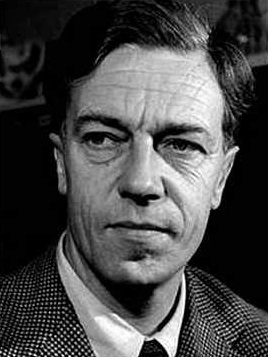
C. Day-Lewis, 1904-1972 – “My Mother’s Sister” from Complete Poems

Discover more from Tim Miller

Subscribe to get the latest posts to your email.

Leave a Reply

This site uses Akismet to reduce spam. Learn how your comment data is processed.

#225 – The invention of the wheel, and the power of storytelling Human Voices Wake Us

An episode from 4/13/26: Tonight, I read about the invention of the wheel and what it meant for the earliest communities of Europe and the Eurasian steppes, from David Anthony’s The Horse, the Wheel, and Language.After this, a few passages from Norman Longmate’s How We Lived Then: A History of Everyday Life During the Second World War tells the story of gasoline rationing in England during the war, and the sometimes-comical lengths people went to hoard the fuel they could get a hold of.Finally, passages from S. Y. Agnon’s Days of Awe: A Treasury of Jewish Wisdom for Reflection, Repentance, and Renewal on the High Holy Days and Gershom Scholem’s Major Trends in Jewish Mysticism illustrate the power of language and storytelling in the Jewish tradition.The best way to support the podcast is by leaving a review on Apple or Spotify, sharing it with others, or sending me a note on what you think. You can also order any of my books: Time and the River: From Columbine to the Invention of Fire, Notes from the Grid, To the House of the Sun, The Lonely Young & the Lonely Old, and Bone Antler Stone. I've also edited a handful of books in the S4N Pocket Poems series. I also have a YouTube channel where I share poems and excerpts from these books, mostly as YouTube shorts.Email me at humanvoiceswakeus1@gmail.com.
  1. #225 – The invention of the wheel, and the power of storytelling
  2. #224: Let's talk about William Blake
  3. #223 – How to write two novels at the same time, with Charles Dickens
  4. #222: Seamus Heaney – 10 Essential Poems
  5. #221: Volcanoes, Plagues & the Childhood of a Kabbalist
  6. #220: The working poor and a so-so murder show
  7. #219: When a paragraph changes your life
  8. #218: Poetry to Live By
  9. #217: Voices from 1900-1914
  10. #216: Poets, Prophets, Seeresses & Goddesses from Time & the River

Discover more from Tim Miller

Subscribe now to keep reading and get access to the full archive.

Continue reading