Gone the three ancient ladies
Who creaked on the greenhouse ladders,
Reaching up white strings
To wind, to wind
The sweet-pea tendrils, the smilax,
Nasturtiums, the climbing
Roses, to straighten
Carnations, red
Chrysanthemums; the stiff
Stems, jointed like corn,
They tied and tucked, –
These nurses of nobody else.
Quicker than birds, they dipped
Up and sifted the dirt;
They sprinkled and shook;
They stood astride pipes,
Their skirts billowing out wide into tents,
Their hands twinkling with wet;
Like witches they flew along rows
Keeping creation at ease;
With a tendril for needle
They sewed up the air with a stem;
They teased out the seed that the cold kept asleep, –
All the coils, loops, and whorls.
They trellised the sun; they plotted for more than themselves.

I remember how they picked me up, a spindly kid,
Pinching and poking my thin ribs
Till I lay in their laps, laughing,
Weak as a whiffet;
Now, when I’m alone and cold in my bed,
They still hover over me,
These ancient leathery crones,
With their bandannas stiffened with sweat,
And their thorn-bitten wrists,
And their snuff-laden breath blowing lightly over me in my first sleep.

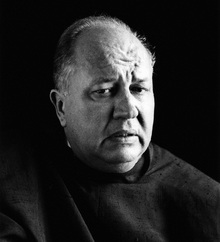
Theodore Roethke, 1908-1963 – “Frau Bauman, Frau Schmidt, & Frau Schwartze” from Collected Poems


Discover more from Tim Miller

Subscribe to get the latest posts to your email.

4 responses

  1. oh that’s lovely. “Fist sleep” really? omg

    Liked by 1 person

  2. yikes that’s an unfortunate typo. I fixed that…. Roethke has really wonderful poems about his childhood

    Like

  3. HOLY COW I am totally stealing it. I thought “fist sleep” was the way we curl up, draw ourselves in as children sleeping.

    I’m stealing it. Don’t anyone else steal it! 🙂

    Liked by 1 person

  4. Let it be known that “fist of sleep” is a phrase that only Mr Tom Hart can use. Anyone else attempting to use it will be fined.

    Like

Leave a Reply

This site uses Akismet to reduce spam. Learn how your comment data is processed.

#226: The Vitality and terror of cities Human Voices Wake Us

An episode from 4/20/26: Tonight, we delve into the world of cities. First, in a passage from Sam Quinones’s Dreamland: The True Tale of America’s Opiate Epidemic, the town of Portsmouth, Ohio, is lovingly described in the decades before the epidemic.Next, a passage from Ben Wilson’s Metropolis: A History of the City, Humankind’s Great Invention describes the author’s travels to research the book, and his conclusion that the messiness of urban life is key to its vitality and innovation.Finally, I read letters from twentieth-century Jewish immigrants to New York City. Originally published in the Jewish Daily Forward and later collected in The Bintel Brief, the letters describe the difficulties faced by newly arrived immigrants who had rarely (if ever) experienced life outside of the insular world of shtetl.    The best way to support the podcast is by leaving a review on Apple or Spotify, sharing it with others, or sending me a note on what you think. You can also order any of my books: Time and the River: From Columbine to the Invention of Fire, Notes from the Grid, To the House of the Sun, The Lonely Young & the Lonely Old, and Bone Antler Stone. I've also edited a handful of books in the S4N Pocket Poems series. I also have a YouTube channel where I share poems and excerpts from these books, mostly as YouTube shorts.Email me at humanvoiceswakeus1@gmail.com.
  1. #226: The Vitality and terror of cities
  2. #225 – The invention of the wheel, and the power of storytelling
  3. #224: Let's talk about William Blake
  4. #223 – How to write two novels at the same time, with Charles Dickens
  5. #222: Seamus Heaney – 10 Essential Poems
  6. #221: Volcanoes, Plagues & the Childhood of a Kabbalist
  7. #220: The working poor and a so-so murder show
  8. #219: When a paragraph changes your life
  9. #218: Poetry to Live By
  10. #217: Voices from 1900-1914

Discover more from Tim Miller

Subscribe now to keep reading and get access to the full archive.

Continue reading