Swerving east, from rich industrial shadows
And traffic all night north; swerving through fields
Too thin and thistled to be called meadows,
And now and then a harsh-named halt, that shields
Workmen at dawn; swerving to solitude
Of skies and scarecrows, haystacks, hares and pheasants,
And the widening river’s slow presence,
The piled gold clouds, the shining gull-marked mud,

Gathers to the surprise of a large town:
Here domes and statues, spires and cranes cluster
Beside grain-scattered streets, barge-crowded water,
And residents from raw estates, brought down
The dead straight miles by stealing flat-faced trolleys,
Push through plate-glass swing doors to their desires –
Cheap suits, red kitchen-ware, sharp shoes, iced lollies,
Electric mixers, toasters, washers, driers –

A cut-price crowd, urban yet simple, dwelling
Where only salesmen and relations come
Within a terminate and fishy-smelling
Pastoral of ships up streets, the slave museum,
Tattoo-shops, consulates, grim head-scarfed wives;
And out beyond its mortgaged half-built edges
Fast-shadowed wheatfields, running high as hedges,
Isolate villages, where removed lives

Loneliness clarifies. Here silence stands
Like heat. Here leaves unnoticed thicken,
Hidden weeds flower, neglected waters quicken,
Luminously – peopled air ascends;
And past the poppies bluish neutral distance
Ends the land suddenly beyond a beach
Of shapes and shingle. Here is unfenced existence:
Facing the sun, untalkative, out of reach.

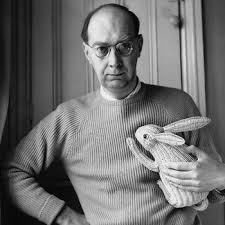
Philip Larkin, 1922-1985 – “Here” from Collected Poems


Discover more from Tim Miller

Subscribe to get the latest posts to your email.

Leave a Reply

This site uses Akismet to reduce spam. Learn how your comment data is processed.

#225 – The invention of the wheel, and the power of storytelling Human Voices Wake Us

An episode from 4/13/26: Tonight, I read about the invention of the wheel and what it meant for the earliest communities of Europe and the Eurasian steppes, from David Anthony’s The Horse, the Wheel, and Language.After this, a few passages from Norman Longmate’s How We Lived Then: A History of Everyday Life During the Second World War tells the story of gasoline rationing in England during the war, and the sometimes-comical lengths people went to hoard the fuel they could get a hold of.Finally, passages from S. Y. Agnon’s Days of Awe: A Treasury of Jewish Wisdom for Reflection, Repentance, and Renewal on the High Holy Days and Gershom Scholem’s Major Trends in Jewish Mysticism illustrate the power of language and storytelling in the Jewish tradition.The best way to support the podcast is by leaving a review on Apple or Spotify, sharing it with others, or sending me a note on what you think. You can also order any of my books: Time and the River: From Columbine to the Invention of Fire, Notes from the Grid, To the House of the Sun, The Lonely Young & the Lonely Old, and Bone Antler Stone. I've also edited a handful of books in the S4N Pocket Poems series. I also have a YouTube channel where I share poems and excerpts from these books, mostly as YouTube shorts.Email me at humanvoiceswakeus1@gmail.com.
  1. #225 – The invention of the wheel, and the power of storytelling
  2. #224: Let's talk about William Blake
  3. #223 – How to write two novels at the same time, with Charles Dickens
  4. #222: Seamus Heaney – 10 Essential Poems
  5. #221: Volcanoes, Plagues & the Childhood of a Kabbalist
  6. #220: The working poor and a so-so murder show
  7. #219: When a paragraph changes your life
  8. #218: Poetry to Live By
  9. #217: Voices from 1900-1914
  10. #216: Poets, Prophets, Seeresses & Goddesses from Time & the River

Discover more from Tim Miller

Subscribe now to keep reading and get access to the full archive.

Continue reading