I saw the garden where my aunt had died
And her two children and a woman from next door;
It was like a burst pod filled with clay.

A mile away in the night I had heard the bombs
Sing and then burst themselves between cramped houses
With bright soft flashes and sounds like banging doors;

The last of them crushed the four bodies into the ground,
Scattered the shelter, and blasted my uncle’s corpse
Over the housetop and into the street beyond.

Now the garden lay stripped and stale; the iron shelter
Spread out its separate petals around a smooth clay saucer.
Small, and so tidy it seemed nobody had ever been there.

When I saw it, the house was blown clean by blast and care.
Relations had already torn out the new fireplaces;
My cousin’s pencils lasted me several years.

And in his office notepad that was given me
I found solemn drawings in crayon of blondes without dresses.
In his lifetime I had not known him well.

These were the things I noticed at ten years of age:
Those, and the four hearses outside our house,
The chocolate cakes, and my classmates’ half-shocked envy.

But my grandfather went home from the mortuary
And for five years tried to share the noises in his skull,
Then he walked out and lay under a furze-bush to die.

When my father came back from identifying the daughter
He asked us to remind him of her mouth.
We tried. He said ‘I think it was the one’.

These were marginal people I had met only rarely
And the end of the whole household meant that no grief was seen;
Never have people seemed so absent from their own deaths.

This bloody episode of four whom I could understand better dead
Gave me something I needed to keep a long story moving;
I had no pain of it; can find no scar even now.

But had my belief in the fiction not been thus buoyed up
I might, in the sigh and strike of the next night’s bombs
Have realized a little what they meant, and for the first time been afraid.

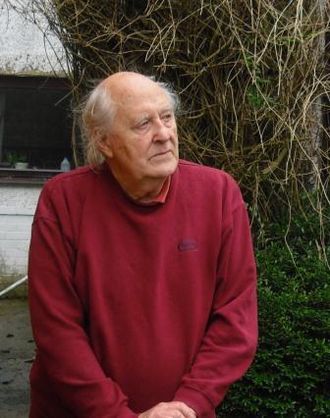
Roy Fisher, 1930-2017 – “The Entertainment of War” from The Long and the Short of It: Poems 1955-2010


Discover more from Tim Miller

Subscribe to get the latest posts to your email.

Leave a Reply

This site uses Akismet to reduce spam. Learn how your comment data is processed.

#225 – The invention of the wheel, and the power of storytelling Human Voices Wake Us

An episode from 4/13/26: Tonight, I read about the invention of the wheel and what it meant for the earliest communities of Europe and the Eurasian steppes, from David Anthony’s The Horse, the Wheel, and Language.After this, a few passages from Norman Longmate’s How We Lived Then: A History of Everyday Life During the Second World War tells the story of gasoline rationing in England during the war, and the sometimes-comical lengths people went to hoard the fuel they could get a hold of.Finally, passages from S. Y. Agnon’s Days of Awe: A Treasury of Jewish Wisdom for Reflection, Repentance, and Renewal on the High Holy Days and Gershom Scholem’s Major Trends in Jewish Mysticism illustrate the power of language and storytelling in the Jewish tradition.The best way to support the podcast is by leaving a review on Apple or Spotify, sharing it with others, or sending me a note on what you think. You can also order any of my books: Time and the River: From Columbine to the Invention of Fire, Notes from the Grid, To the House of the Sun, The Lonely Young & the Lonely Old, and Bone Antler Stone. I've also edited a handful of books in the S4N Pocket Poems series. I also have a YouTube channel where I share poems and excerpts from these books, mostly as YouTube shorts.Email me at humanvoiceswakeus1@gmail.com.
  1. #225 – The invention of the wheel, and the power of storytelling
  2. #224: Let's talk about William Blake
  3. #223 – How to write two novels at the same time, with Charles Dickens
  4. #222: Seamus Heaney – 10 Essential Poems
  5. #221: Volcanoes, Plagues & the Childhood of a Kabbalist
  6. #220: The working poor and a so-so murder show
  7. #219: When a paragraph changes your life
  8. #218: Poetry to Live By
  9. #217: Voices from 1900-1914
  10. #216: Poets, Prophets, Seeresses & Goddesses from Time & the River

Discover more from Tim Miller

Subscribe now to keep reading and get access to the full archive.

Continue reading