When he had made sure there were no survivors in his house
And that all the suitors were dead, heaped in blood and dust
Like fish that fishermen with fine-meshed nets have hauled
Up gasping for salt water, evaporating in the sunshine,
Odysseus, spattered with muck and like a lion dripping blood
From his chest and cheeks after devouring a farmer’s bullock,
Ordered the disloyal housemaids to sponge down the armchairs
And tables, while Telemachos, the oxherd and the swineherd
Scraped the floor with shovels, and then between the portico
And the roundhouse stretched a hawser and hanged the women
So none touched the ground with her toes, like long-winged thrushes
Or doves trapped in a mist-net across the thicket where they roost,
Their heads bobbing in a row, their feet twitching but not for long,
And when they had dragged Melanthios’s corpse into the haggard
And cut off his nose and ears and cock and balls, a dog’s dinner,
Odysseus, seeing the need for whitewash and disinfectant,
Fumigated the house and the outhouses, so that Hermes
Like a clergyman might wave the supernatural baton
With which he resurrects or hypnotises those he chooses,
And waken and round up the suitors’ souls, and the housemaids’,
Like bats gibbering in the nooks of their mysterious cave
When out of the clusters that dangle from the rocky ceiling
One of them drops and squeaks, so their souls were batsqueaks
As they flittered after Hermes, their deliverer, who led them
Along the clammy sheughs, then past the oceanic streams
And the white rock, the sun’s gatepost in that dreamy region,
Until they came to a bog-meadow full of bog-asphodels
Where the residents are ghosts or images of the dead.

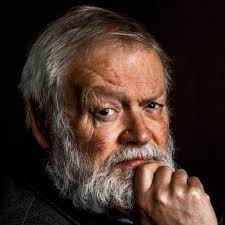
Michael Longley, b. 1939 – “The Butchers” from Collected Poems

Discover more from Tim Miller

Subscribe to get the latest posts to your email.

Leave a Reply

This site uses Akismet to reduce spam. Learn how your comment data is processed.

#225 – The invention of the wheel, and the power of storytelling Human Voices Wake Us

An episode from 4/13/26: Tonight, I read about the invention of the wheel and what it meant for the earliest communities of Europe and the Eurasian steppes, from David Anthony’s The Horse, the Wheel, and Language.After this, a few passages from Norman Longmate’s How We Lived Then: A History of Everyday Life During the Second World War tells the story of gasoline rationing in England during the war, and the sometimes-comical lengths people went to hoard the fuel they could get a hold of.Finally, passages from S. Y. Agnon’s Days of Awe: A Treasury of Jewish Wisdom for Reflection, Repentance, and Renewal on the High Holy Days and Gershom Scholem’s Major Trends in Jewish Mysticism illustrate the power of language and storytelling in the Jewish tradition.The best way to support the podcast is by leaving a review on Apple or Spotify, sharing it with others, or sending me a note on what you think. You can also order any of my books: Time and the River: From Columbine to the Invention of Fire, Notes from the Grid, To the House of the Sun, The Lonely Young & the Lonely Old, and Bone Antler Stone. I've also edited a handful of books in the S4N Pocket Poems series. I also have a YouTube channel where I share poems and excerpts from these books, mostly as YouTube shorts.Email me at humanvoiceswakeus1@gmail.com.
  1. #225 – The invention of the wheel, and the power of storytelling
  2. #224: Let's talk about William Blake
  3. #223 – How to write two novels at the same time, with Charles Dickens
  4. #222: Seamus Heaney – 10 Essential Poems
  5. #221: Volcanoes, Plagues & the Childhood of a Kabbalist
  6. #220: The working poor and a so-so murder show
  7. #219: When a paragraph changes your life
  8. #218: Poetry to Live By
  9. #217: Voices from 1900-1914
  10. #216: Poets, Prophets, Seeresses & Goddesses from Time & the River

Discover more from Tim Miller

Subscribe now to keep reading and get access to the full archive.

Continue reading