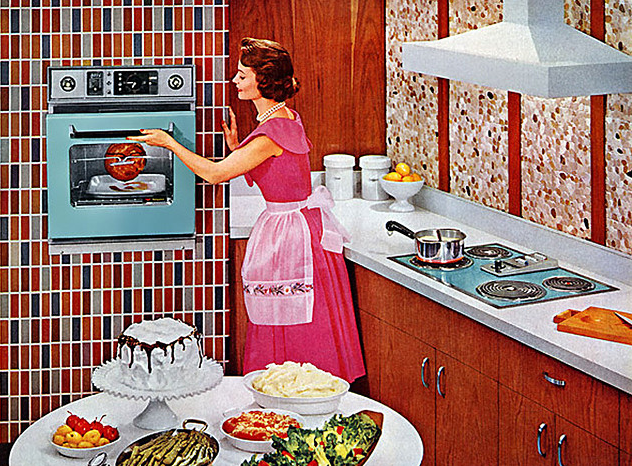
One of the saddest interviews from Studs Terkel’s Working (talk about Human Pages!) comes from a Chicago housewife named Therese Carter:
How would I describe myself? It’ll sound terrible—just a housewife. (Laughs.) It’s true. What is a housewife? You don’t have to have any special talents. I don’t have any….
It’s not really a full day. You think it is? You make me sound important. Keeping talking. (Laughs.)
I don’t think it’s important because for so many years it wasn’t considered. I’m doing what I’m doing and I fill my day and I’m very contented. Yet I see women all around that do a lot more than I do. Women that have to work. I feel they’re worthy of much more of a title than housewife.
If anybody else would say this, I’d talk back to ’em, but I myself feel like it’s not much. Anybody can do it. I was gone for four days and Cathy took over and managed perfectly well without me. (Laughs.) I felt great, I really did. I knew she was capable.
I’ll never say I’m really a good mother until I see the way they all turn out. So far they’ve done fine. I had somebody tell me in the hospital I must have done a good job of raising them. I just went along from day to day and they turned out all right….
You look around at all these career women and they’re really doing things. What am I doing? Cooking and cleaning. (Laughs.) It’s necessary, but it’s not really great….
A housewife is a housewife, that’s all. Low on the totem pole. I can read the paper and find that out. Someone who is a model or a movie star, these are the great ones. I don’t necessarily think they are, but they’re the ones you hear about. A movie star will raise this wonderful family and yet she has a career. I imagine most women would feel less worthy. Not me.
Somebody who goes out and works for a living is more important than somebody who doesn’t. What they do is very important in the business world. What I do is only important to five people. I don’t like putting a housewife down, but everybody has done it for so long. It’s sort of the thing you do. Deep down, I feel what I’m doing is important. But you just hate to say it, because what are you? Just a housewife? (Laughs.)
I love being a housewife. Maybe that’s why I feel so guilty. I shouldn’t be happy doing what I’m doing. (Laughs.) Maybe you’re not supposed to be having fun. I never looked on it as a duty.
– Studs Terkel, Working, 301