#222: Seamus Heaney – 10 Essential Poems – Human Voices Wake Us
- #222: Seamus Heaney – 10 Essential Poems
- #221: Volcanoes, Plagues & the Childhood of a Kabbalist
- #220: The working poor and a so-so murder show
- #219: When a paragraph changes your life
- #218: Poetry to Live By
- #217: Voices from 1900-1914
- #216: Poets, Prophets, Seeresses & Goddesses from Time & the River
- #215: 8 Favorite Poems from "Time and the River"
- #214: Two of the Best Poems You've Never Heard of (by William Cullen Bryant)
- #213: Van Gogh's Early Years
 Read the other Great Myths Here
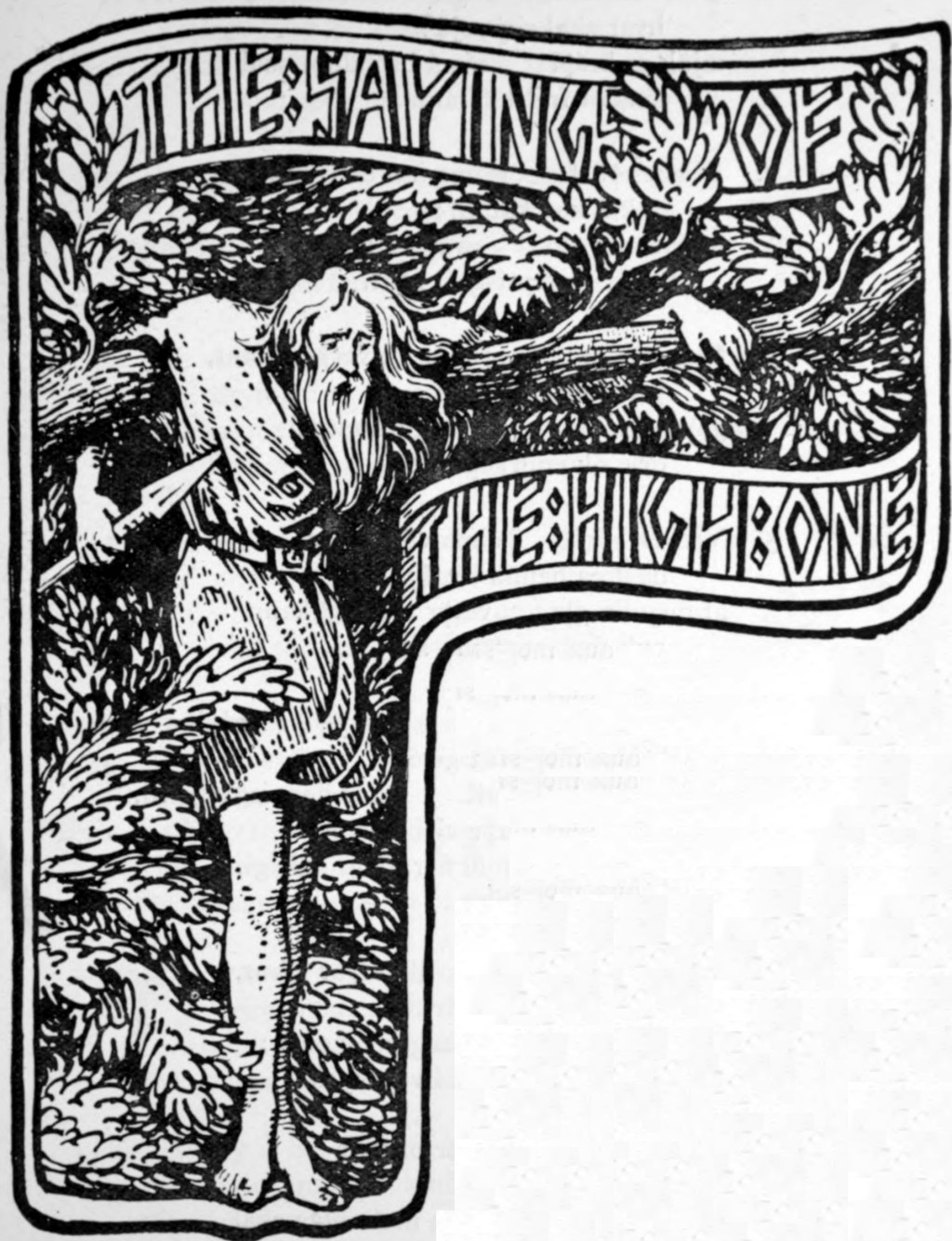
Here are a handful of translations of verses 138-145 of the Hávamál, found in the Poetic or Elder Edda. The Hávamál is a loose collection of sayings and advice – at times cryptic and at times playful – all attributed to Odin. Among the more cryptic parts, these verses detail Odin’s self-sacrifice upon “that windy tree,” and are worth seeing in a few different translations:
I know that I hung on that windy tree,
spear-wounded, nine full nights,
given to Odin, myself to myself,
on that tree that rose from roots
that no man ever knows.
They gave me neither bread nor drink from horn,
I peered down below.
I clutched the runes, screaming I grabbed them,
and then sank back.
I had nine mighty songs from that famed
son of Bölthor, Bestla’s father,
and one swig I snatched of that glorious mead
drained from Frenzy-stirrer.
Then I quickened and flourished,
sprouted and throve.
From a single word, another sprung:
from a single deed, another sprung.
Runes must you find, and the meaningful symbols,
very great symbols,
very strong symbols,
which the mighty sage stained,
and the great powers made,
and a runemaster cut from among the powers:
Odin from the Æsir, and for the elves Dead-one,
Dawdler for the dwarfs, Ásvid for the giants;
I have cut some of myself.
Do you now how to cut? Do you know how to read?
Do you know how to stain? Do you know how to test?
Do you know how to invoke? Do you know how to sacrifice?
Do you know how to dispatch? Do you know how to slaughter?
Better not invoked, than too much sacrificed:
a gift always looks for a return;
better not dispatched, than too much slaughtered:
so Thund cut before the creation of nations:
he rose up when he returned.
– tr. Andy Orchard in The Elder Edda: A Book of Viking Lore
***
I know that I hung on a windy tree
nine long nights,
wounded with a spear, dedicated to Odin,
myself to myself,
on that tree which no man knows
from where its roots run.
No bread did they give me nor drink from a horn,
downwards I peered;
I took up the runes, screaming I took them,
then I fell back form there.
Nine mighty spells I learnt from the famous son
of Bolthor, Bestla’s father,
and I got a drink of the precious mead,
poured from Odrerir.
Then I began to quicken and be wise,
and to grow and to prosper;
one word found another word for me,
one deed found another deed for me.
The runes you must find and the meaningful letter,
a very great letter,
a very powerful letter,
which the mighty sage stained
and the powerful gods made
and the runemaster of the gods carved out.
Odin for the Æsir, and Dain for the Elves,
Dvalin for the dwarfs,
Asvid for the giants,
I myself carved some.
Do you know how to carve, do you know how to interpret,
do you know how to stain, do you know how to test out,
do you know how to ask, do you know how to sacrifice,
do you know how to dispatch, do you know how to slaughter?
Better not to pray, than to sacrifice too much,
one gift always calls for another;
better not dispatched than to slaughter too much.
So Thund carved before the history of nations,
where he rose up, when he came back.
– tr. Carolyne Larrington in The Poetic Edda
***
I ween that I hung on the windy tree,
Hung there for nights full nine;
With the spear I was wounded, and offered I was
To Othin, myself to myself,
On the tree that none may ever know
What root beneath it runs.
None made me happy with loaf or horn,
And there below I looked;
I took up the runes, shrieking I took them,
And forthwith back I fell.
Nine mighty songs I got from the son
Of Bolthern, Bestla’s father;
And a drink I got from the goodly mead
Poured out from Othrörir.
Then began I to thrive, and wisdom to get,
I grew and well I was;
Each word led me to another word,
Each deed to another deed.
Runes shalt thou find, and fateful signs,
That the king of singers colored,
And the mighty gods have made;
Full strong the signs, full mighty the signs
That the ruler of gods doth write.
Othin for the gods, Dain for the elves,
And Dvalin for the dwarfs,
Alsvith for giants and all mankind,
And some myself I wrote.
Knowest how one shall write, knowest how one shall rede?
Knowest how one shall tint, knowest how one makes trial?
Knowest how one shall ask, knowest how one shall offer?
Knowest how one shall send, knowest how one shall sacrifice?
Better no prayer than too big an offering,
By thy getting measure thy gift;
Better is none than too big a sacrifice,
So Thund of old wrote ere man’s race began,
Where he rose on high when home he came.
– tr. H. A. Bellows, The Poetic Edda
***
I wot that I hung on the wind-tossed tree
all nights of nine,
wounded by spear, bespoken to Óthin,
bespoken myself to myself,
upon that tree of which none telleth
from what roots it doth rise.
Neither horn they upheld nor handed me bread;
I looked below me –
aloud I cried –
caught up the runes, caught them up wailing,
thence to the ground fell again.
From the son of Bolthorn, Bestla’s father,
I mastered mighty songs nine,
and a drink I had of the dearest mead,
got from out of Óthroerir.
Then I began to know and gain in insight,
to wax eke in wisdom:
one verse led on to another verse,
one poem led on to another poem.
Runes wilt thou find, and rightly read,
of wondrous weight,
of mighty magic,
which that dyed of dread god,
which that made the holy hosts,
and were etched by Óthin.
Óthin among the Æsir, for alfs, Dain,
Dvalin for the dwarfs,
Alsvith among etins, (but for earth-born me)
wrought I some myself.
Know’st how to write, know’st how to read,
know’st how to stain, know’st how to understand,
know’st how to ask, know’st how to offer,
know’st how to supplicate, know’st how to sacrifice?
’Tis better unasked than offered overmuch;
for ay doth a gift look for gain;
’tis better unasked than offered overmuch:
thus did Óthin write ere the earth began,
when up he rose in after time.
– tr. Lee M. Hollander, The Poetic Edda