#211: Who Was William Cullen Bryant? Human Voices Wake Us

An episode from 1/5/2026: Tonight, I read a handful of passages from Gilbert Muller’s William Cullen Bryant: Author of America. During his lifetime, Bryant (1794-1878) was the most popular poet in America as well as one of the country’s most trusted and influential editors and journalists. Through Bryant’s own words and those of his contemporaries, I trace the story of that double-prominence, and the unease many felt over the fate of Bryant’s poetry against the pressures of politics. I also address how, since his death, Bryant has become almost entirely unknown and unread.The best way to support the podcast is by leaving a review on Apple or Spotify, sharing it with others, or sending me a note on what you think. You can also order any of my books: Time and the River: From Columbine to the Invention of Fire, due out next year, is now available for preorder. Other books include Notes from the Grid, To the House of the Sun, The Lonely Young & the Lonely Old, and Bone Antler Stone. I've also edited a handful of books in the S4N Pocket Poems series.Email me at humanvoiceswakeus1@gmail.com.
  1. #211: Who Was William Cullen Bryant?
  2. #210: Memories & Legends of William Shakespeare
  3. #209 – Being a Jew in 1900, Being a Jew Now
  4. #208: Bach & God
  5. #207 – Death, the Gods, and Endless Life in Ancient Egypt

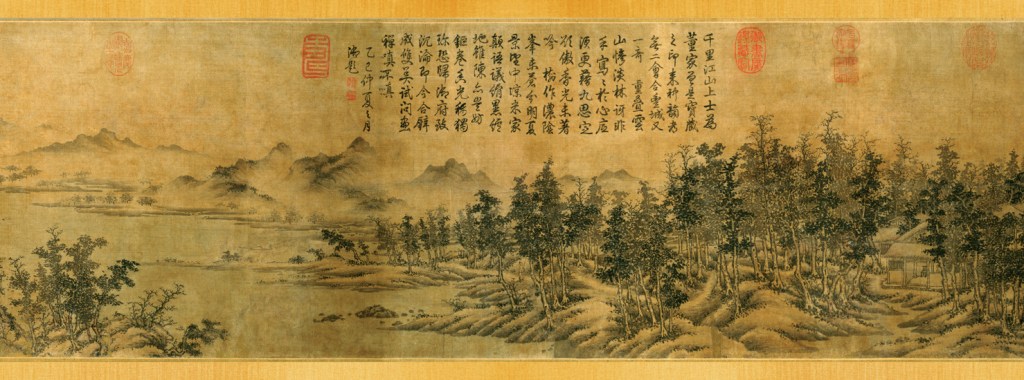
When superior people hear of the Way,
they carry it out with diligence.
When middling people hear of the Way,
it sometimes seems to be there, sometimes not.
When lesser people hear of the Way,
they ridicule it greatly.
If they didn’t laugh at it,
it wouldn’t be the Way.
So there are constructive sayings on this:
The Way of illumination seems dark,
the Way of advancement seems retiring,
the Way of equality seems to categorize;
higher virtue seems empty,
great purity seems ignominious,
broad virtue seems insufficient,
constructive virtue seems careless.
Simply honesty seems changeable,
great range has no boundaries,
great vessels are finished late;
the great sound has a rarefied tone,
the great image has no form,
the Way hides in namelessness.
Only the Way can enhance and perfect.

– Thomas Cleary


When superior people hear of the Way
they follow it with devotion
when average people hear of the Way
they wonder if it exists
when inferior people hear of the Way
they laugh out loud
if they didn’t laught
it wouldn’t be the Way
hence these sayings arose
the brightest path seems dark
the path leading forward seems backward
the smoothest path seems rough
the highest virtue low
the whitest white pitch-black
the greatest virtue wanting
the staunchest virtue timid
the truest truth uncertain
the perfect square without corners
the perfect tool without uses
the perfect sound hushed
the perfect image without form
for the Tao is hidden and nameless
but because it’s the Tao
it knows how to start and how to finish

– Red Pine


When men of service hearken to the Way,
The lofty strive to see it applied,
The average cannot seem to decide,
While the lower sort grandly deride.
Their derision makes Dao’s reputation.
So the Words of Guidance says:
“Seers of the Way seem not to see,
And those who advance, to retreat.
The smoothest path seems unsure,
Honored virtue seems undistinguished,
Ample virtue unqualified,
Resolute virtue undependable,
Stable virtue unfaithful.
Pure white seems impure,
Broad planes lack angles,
Great works take time,
Mighty voices rarely sound,
Grand vision has no set design,
Unknown the Way and thus unnamed.”
But the Way it is, the Way alone,
That brings first motions to fruition.

– Moss Roberts

Discover more from Tim Miller

Subscribe to get the latest posts to your email.

One response

#211: Who Was William Cullen Bryant? Human Voices Wake Us

An episode from 1/5/2026: Tonight, I read a handful of passages from Gilbert Muller’s William Cullen Bryant: Author of America. During his lifetime, Bryant (1794-1878) was the most popular poet in America as well as one of the country’s most trusted and influential editors and journalists. Through Bryant’s own words and those of his contemporaries, I trace the story of that double-prominence, and the unease many felt over the fate of Bryant’s poetry against the pressures of politics. I also address how, since his death, Bryant has become almost entirely unknown and unread.The best way to support the podcast is by leaving a review on Apple or Spotify, sharing it with others, or sending me a note on what you think. You can also order any of my books: Time and the River: From Columbine to the Invention of Fire, due out next year, is now available for preorder. Other books include Notes from the Grid, To the House of the Sun, The Lonely Young & the Lonely Old, and Bone Antler Stone. I've also edited a handful of books in the S4N Pocket Poems series.Email me at humanvoiceswakeus1@gmail.com.
  1. #211: Who Was William Cullen Bryant?
  2. #210: Memories & Legends of William Shakespeare
  3. #209 – Being a Jew in 1900, Being a Jew Now
  4. #208: Bach & God
  5. #207 – Death, the Gods, and Endless Life in Ancient Egypt
  6. #206 – The Discovery of Indo-European Languages – 1876
  7. #205: Learning to Read, c. 2000 BCE
  8. #204: Walt Whitman's "Crossing Brooklyn Ferry," 1856
  9. #203: Bruce Springsteen Talks About "Nebraska" – 1984
  10. #202 – A Death at Sea, 1834

Discover more from Tim Miller

Subscribe now to keep reading and get access to the full archive.

Continue reading