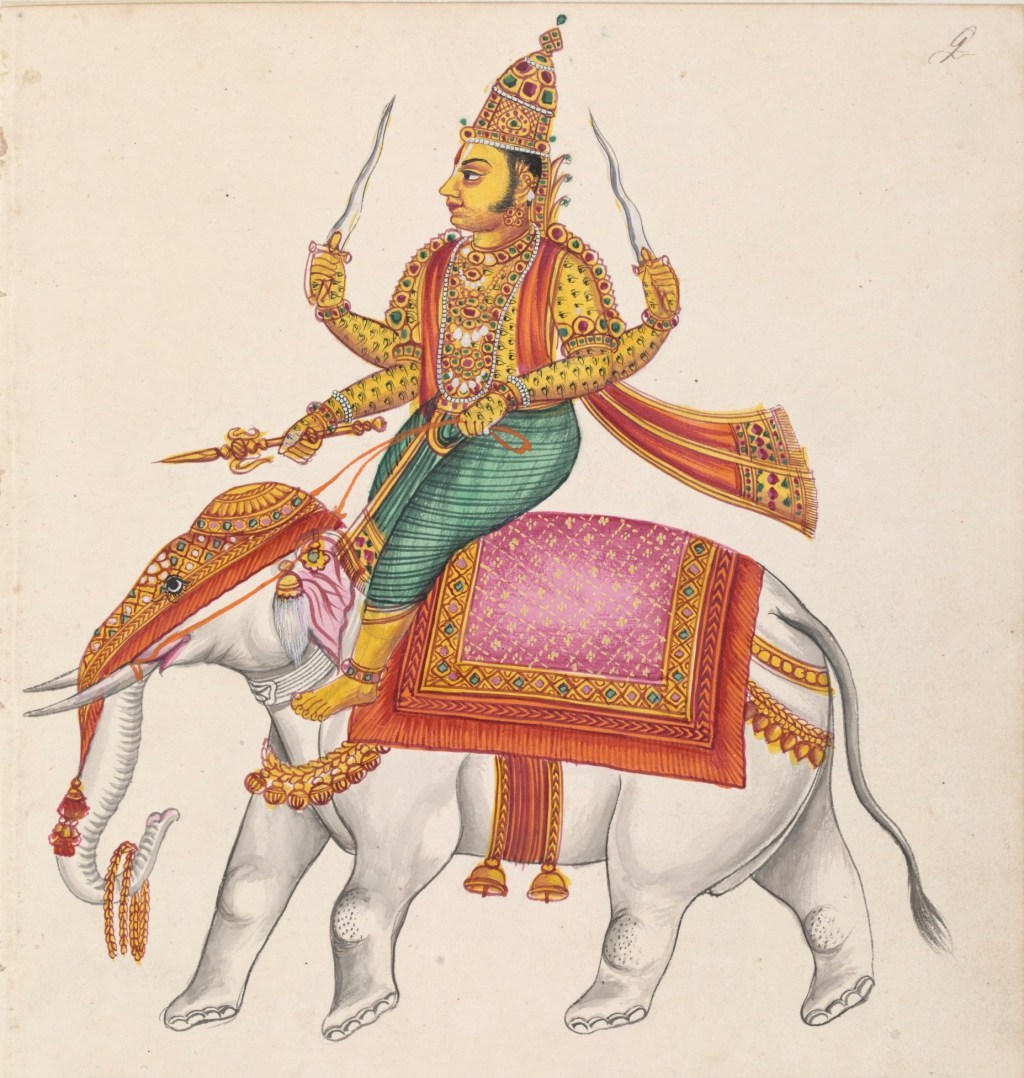
An episode from 1/12/2026: Tonight, I read from the oldest religious poetry from India, the collection of 1,028 ritual hymns known as the The Rig Veda. Specifically, I read from the most popular story found there, the defeat of the serpent Vrtra by the god Indra and the freeing of the waters of the world.

I begin by telling the story briefly and then sharing examples of the short references to it that are scattered all over the Rig Veda (from hymns 1.51, 1.56, 1.57, 2.19, 4.17, 4.30), which in themselves are indications as to how well-known the story was. Finally, I read a handful of hymns (1.32, 1.80, 4.19) in their entirety that tell the story in different ways.

The translation and commentary I read from is by Stephanie Jamison and Joel Brereton; it took years to find a good and decently-priced used copy of these volumes, but I would recommend them to anyone interested in Hinduism, poetry, or religion.

The best way to support the podcast is by leaving a review on Apple or Spotify, sharing it with others, or sending me a note on what you think. You can also order any of my books: Time and the River: From Columbine to the Invention of Fire, due out next year, is now available for preorder. Other books include Notes from the Grid, To the House of the Sun, The Lonely Young & the Lonely Old, and Bone Antler Stone. I’ve also edited a handful of books in the S4N Pocket Poems series.

Email me at humanvoiceswakeus1@gmail.com.

Discover more from Tim Miller

Subscribe to get the latest posts to your email.

Leave a Reply

This site uses Akismet to reduce spam. Learn how your comment data is processed.

#217: Voices from 1900-1914 Human Voices Wake Us

An episode from 1/2/23: Tonight, I read a handful of voices from those living in Europe and the United States between 1900 and 1914. Rephrased only slightly, nearly all of their concerns (over technology, gender, nationalism, war, eugenics) feel like they could appear in the news or on the street today. Then and now, what is actually going on alongside all the dread? What can we learn from these voices that sound so much like our own, and what will people look back on 2023 learn for themselves?Each of these quotations can be found in Philipp Blom’s wonderful book, The Vertigo Years.The best way to support the podcast is by leaving a review on Apple or Spotify, sharing it with others, or sending me a note on what you think. You can also order any of my books: Time and the River: From Columbine to the Invention of Fire, due out next year, is now available for preorder. Other books include Notes from the Grid, To the House of the Sun, The Lonely Young & the Lonely Old, and Bone Antler Stone. I've also edited a handful of books in the S4N Pocket Poems series. I also have a YouTube channel where I share poems and excerpts from these books, mostly as YouTube shorts.Email me at humanvoiceswakeus1@gmail.com.
  1. #217: Voices from 1900-1914
  2. #216: Poets, Prophets, Seeresses & Goddesses from Time & the River
  3. #215: 8 Favorite Poems from "Time and the River"
  4. #214: Two of the Best Poems You've Never Heard of (by William Cullen Bryant)
  5. #213: Van Gogh's Early Years
  6. #212: The Most Popular Story in Ancient India
  7. #211: Who Was William Cullen Bryant?
  8. #210: Memories & Legends of William Shakespeare
  9. #209 – Being a Jew in 1900, Being a Jew Now
  10. #208: Bach & God

Discover more from Tim Miller

Subscribe now to keep reading and get access to the full archive.

Continue reading