“The world is too much with us”
The world is too much with us; late and soon,
Getting and spending, we lay waste our powers:
Little we see in nature that is ours;
We have given our hearts away, a sordid boon!
This Sea that bares her bosom to the moon;
The Winds that will be howling at all hours
And are up-gathered now like sleeping flowers;
For this, for every thing, we are out of tune;
It moves us not – Great God! I’d rather be
A Pagan suckled in a creed outworn;
So might I, standing on this pleasant lea,
Have glimpses that would make me less forlorn;
Have sight of Proteus coming from the sea;
Or hear old Triton blow his wreathed horn.


London
1802
Milton! thou should’st be living at this hour:
England hath need of thee: she is a fen
Of stagnant waters: altar, sword and pen,
Fireside, the heroic wealth of hall and bower,
Have forfeited their ancient English dower
Of inward happiness. We are selfish men;
Oh! raise us up, return to us again;
And give us manners, virtue, freedom, power.
Thy soul was like a Star and dwelt apart:
Thou hadst a voice whose sound was like the sea;
Pure as the naked heavens, majestic, free,
So didst thou travel on life’s common way,
In chearful godliness; and yet thy heart
The lowliest duties on itself did lay.


“Surprized by joy – impatient as the wind”
Surprized by joy – impatient as the Wind
I wished to share the transport – Oh! with whom
But Thee, long buried in the silent Tomb,
That spot which no vicissitude can find?
Love, faithful love recalled thee to my mind –
But how could I forget thee! – Through what power
Even for the least division of an hour,
Have I been so beguiled as to be blind
To my most grievous loss? – That thought’s return
Was the worst pang that sorrow ever bore,
Save one, one only, when I stood forlorn,
Knowing my heart’s best treasure was no more;
That neither present time, nor years unborn
Could to my sight that heavenly face restore.
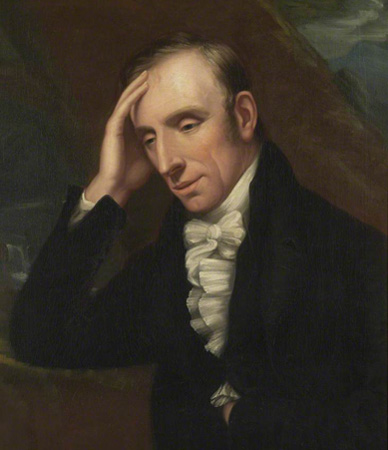
William Wordsworth, 1770-1850 – from The Major Works



Leave a Reply