Thou still unravish’d bride of quietness,
		Thou foster-child of silence and slow time,
Sylvan historian, who canst thus express
		A flowery tale more sweetly than our rhyme:
What leaf-fring’d legend haunts about thy shape
		Of deities or mortals, or of both,
			In Tempe or the dales of Arcady?
What men or gods are these? What maidens loth?
		What mad pursuit? What struggle to escape?
			What pipes and timbrels? What wild ecstasy?

Heard melodies are sweet, but those unheard
		Are sweeter; therefore, ye soft pipes, play on;
Not to the sensual ear, but, more endear’d,
		Pipe to the spirit ditties of no tone:
Fair youth, beneath the trees, thou canst not leave
		Thy song, nor ever can those trees be bare;
			Bold Lover, never, never canst thou kiss,
Though winning near the goal – yet, do not grieve;
		She cannot fade, though thou hast not thy bliss,
			For ever wilt thou love, and she be fair!

Ah, happy, happy boughs! that cannot shed
		Your leaves, nor ever bid the Spring adieu;
And, happy melodist, unwearied,
		For ever piping songs for ever new;
More happy love! more happy, happy love!
		For ever warm and still to be enjoy’d,
			For ever panting, and for ever young;
All breathing human passion far above,
		That leaves a heart high-sorrowful and cloy’d,
			A burning forehead, and a parching tongue.

Who are these coming to the sacrifice?
		To what green altar, O mysterious priest,
Lead’st thou that heifer lowing at the skies,
		And all her silken flanks with garlands drest?
What little town by river or sea shore,
		Or mountain-built with peaceful citadel,
			Is emptied of this folk, this pious morn?
And, little town, thy streets for evermore
		Will silent be; and not a soul to tell
			Why thou art desolate, can e’er return.

O Attic shape! Fair attitude! with brede
		Of marble men and maidens overwrought,
With forest branches and the trodden weed;
		Thou, silent form, dost tease us out of thought
As doth eternity: Cold Pastoral!
		When old age shall this generation waste,
			Thou shalt remain, in midst of other woe
Than ours, a friend to man, to whom thou say’st,
		Beauty is truth, truth beauty, – that is all
			Ye know on earth, and all ye need to know.
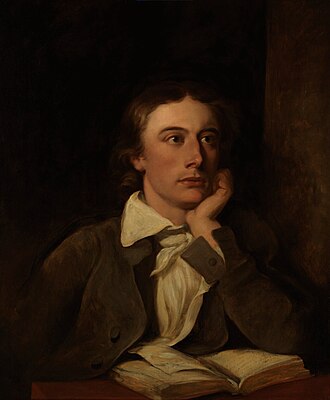
John Keats, 1795-1821 – “Ode on a Grecian Urn” from Complete Poems


Leave a Reply