Many thanks to Liam Guilar, poetry editor at The Brazen Head, who just published four poems of mine. You can read them here.

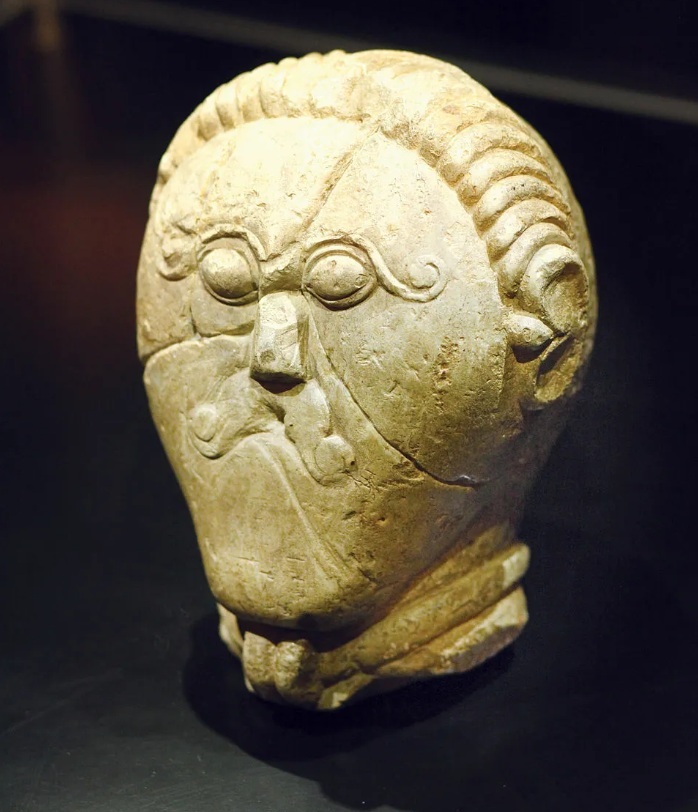
As my note to the poems says, they come from my much-longer upcoming book, The Great Year, and the poems are spoken by a preserved severed head, named John, hence their ecstatic/puzzling nature. This is also the longest selection of poetry from The Great Year to yet appear, and easily the longest rhyming poems of mine to appear anywhere.

Here is my note to the poems:

The Great Year takes place a few centuries from now as a handful of people journey from eastern Europe to Iceland after the world has been decimated by war and environmental collapse. As they go, and in the manner of a post-apocalyptic Canterbury Tales, the survivors take turns telling stories. One of these survivors is a severed and magically-preserved head named John who occasionally recites poetry of his own. His first two songs are gnomic and ecstatic and don’t need any context.  The third narrates how he met another survivor, a man named Smith (also his occupation). The fourth song, coming near the end of the book, describes John’s affection for his friends that he has traveled with for so long. 

Discover more from Tim Miller

Subscribe to get the latest posts to your email.

Leave a Reply

This site uses Akismet to reduce spam. Learn how your comment data is processed.

#223 – How to write two novels at the same time, with Charles Dickens Human Voices Wake Us

An episode from 1/10/23: Tonight we take a peek into the creative life of Charles Dickens (1812-1870). Through a handful of readings from Claire Tomalin’s biography of Dickens, we see how he was able to juggle, for almost a year, the writing of two novels for simultaneous serial publication. Then, thanks to a letter written by Fyodor Dostoevsky, who visited Dickens in London in 1862, we also hear Dickens admitting that his villains were better reflections of himself than his more lovable and generous characters. We also answer the question: what do David Copperfield and Jane Eyre have in common? Finally, we hear about the chance encounter Dickens had with a young fan in America, who grew up to become a novelist herself.Note: these readings from the life of Dickens were originally the first part of a longer episode, hence the brief mention of the second part, no longer included, and the abrupt ending here. Listeners will forgive these frayed edges. The best way to support the podcast is by leaving a review on Apple or Spotify, sharing it with others, or sending me a note on what you think. You can also order any of my books: Time and the River: From Columbine to the Invention of Fire, Notes from the Grid, To the House of the Sun, The Lonely Young & the Lonely Old, and Bone Antler Stone. I've also edited a handful of books in the S4N Pocket Poems series. I also have a YouTube channel where I share poems and excerpts from these books, mostly as YouTube shorts. Email me at humanvoiceswakeus1@gmail.com.
  1. #223 – How to write two novels at the same time, with Charles Dickens
  2. #222: Seamus Heaney – 10 Essential Poems
  3. #221: Volcanoes, Plagues & the Childhood of a Kabbalist
  4. #220: The working poor and a so-so murder show
  5. #219: When a paragraph changes your life
  6. #218: Poetry to Live By
  7. #217: Voices from 1900-1914
  8. #216: Poets, Prophets, Seeresses & Goddesses from Time & the River
  9. #215: 8 Favorite Poems from "Time and the River"
  10. #214: Two of the Best Poems You've Never Heard of (by William Cullen Bryant)

Discover more from Tim Miller

Subscribe now to keep reading and get access to the full archive.

Continue reading