As I began to plan the February release of my new book, Time and the River: From Columbine to the Invention of Fire, the one obvious way of promoting it was to create YouTube videos for many of the book’s poems.
A few weeks ago, I posted the first of these, “Edward Hopper’s ‘Nighthawks’” and “Dylan Klebold’s Crush.” Both videos garnered nearly 900 views in just a few days–no doubt a drop in the bucket compared to anything that goes viral, but pretty good for poetry. I immediately posted a third video, “Robert Oppenheimer,” and it went nowhere. By the next morning, I understood why.
You can watch the Oppenheimer and Klebold videos here:
I woke up to find two messages from YouTube, both sent less than an hour apart.
The Oppenheimer video had been taken down because it “didn’t follow our violent or graphic content policy.“ Then the entire channel was removed because one of the videos (I assume “Dylan Klebold’s Crush”) violated YouTube’s “violent criminal organizations policy… Content that intends to praise, promote, or aid violent extremist or criminal organizations isn’t allowed on YouTube.“
One of the emails did say that YouTube “may make limited exceptions for [violent or graphic] content with educational, documentary, scientific, or artistic context.” Even if you were to think poorly of the poems, I’m not sure how the videos for them don’t fall, at the very least, under the “artistic” exception.
You can read both emails below:
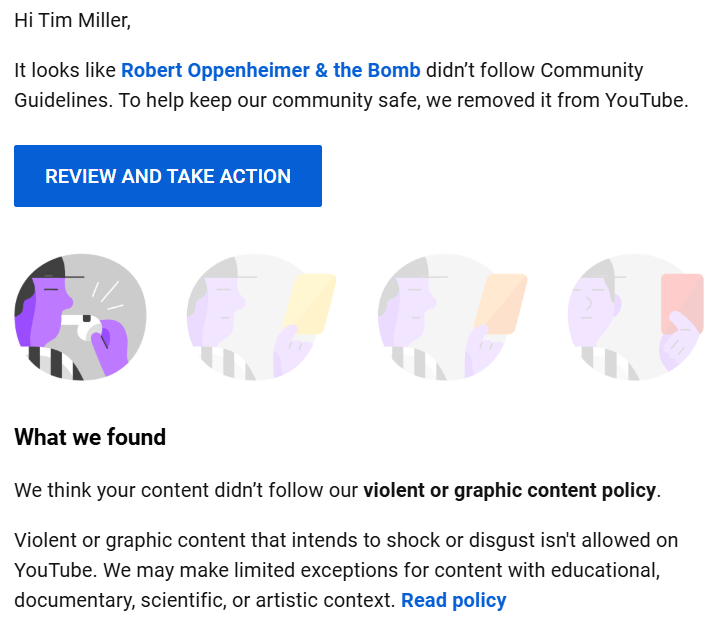
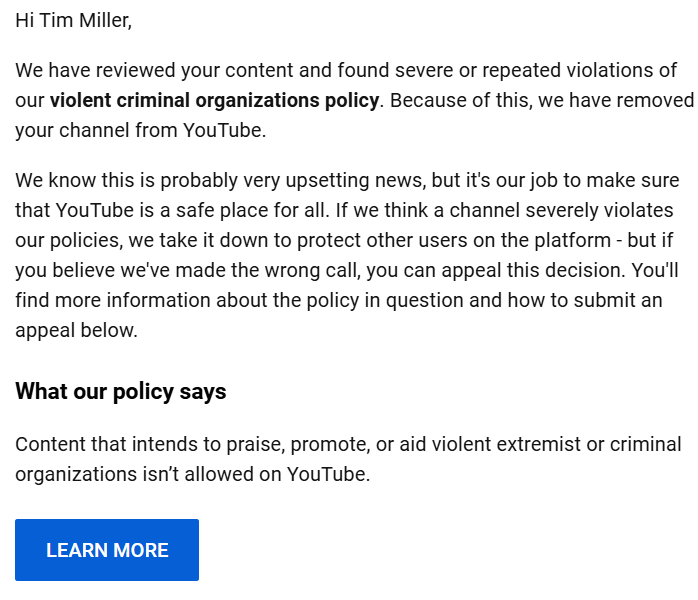
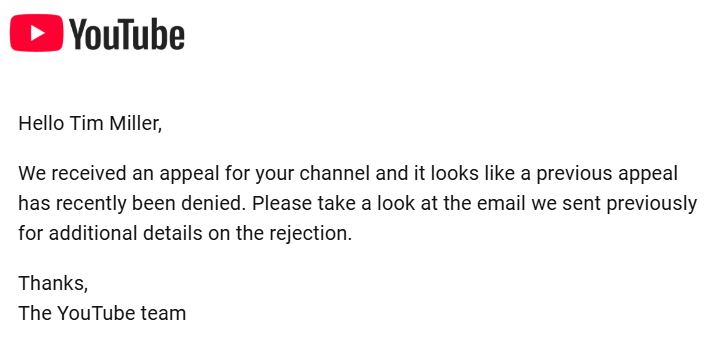
When I saw this, I sent an appeal right away. In barely enough time for a human being to watch the videos, I received this message:

As I’ve learned in the weeks after this happened, clicking on resolution options goes nowhere. The same reply is always sent:
Readers of this website will know that “Robert Oppenheimer” was originally published almost ten years ago at the journal Poethead, and since then has been reposted pretty frequently on this blog. In all that time, the poem has never been accused of being excessively graphic. While I considered that YouTube’s problem was with the accompanying video, I had to wonder: how could an honest creative response to the atomic bomb be anything but disturbing or graphic? And how could they object to the archival footage used, since it was largely drawn from videos and documentaries YouTube continues to host?
As for “Dylan Klebold’s Crush,” it was featured back in 2021 on a podcast episode of mine, and no listener to it has ever taken issue with the poem. The poem is also mentioned in every blurb on Time and the River’s back cover. These blurbs were made by three respected poets, and none of them has ever suggested the poem is problematic or in poor taste, let alone that it sounded like I was “praising, promoting, or aiding violence.”
Both videos (as well as many others from the book) have since been posted on this website, and no one has objected to any of them.
Has anyone else had a similar incident with YouTube, or another social media site? Has anyone else’s work been swallowed by an automated process, or been mistaken for offensive material, leaving their creators with no recourse?
It is also hard to stomach the fact that my videos and poems (where each image and word were chosen and balanced with care) have been judged to be offensive and dangerous, while one of the most vile places on the internet–that is, the YouTube comments section–continues to be filled with thoughtless, careless, and graphic content all day, every day, up to and including calls for violence and prejudice.
The writer in me would like this to see all of this as a huge compliment: “It’s a testament to the power of poetry when combined with powerful images!” But the reason the videos were taken down, and the reason anyone at YouTube remains unreachable, is probably a lot more pedestrian.
As it stands, I am simply a poet who cares about history and who thinks that poetry is still a vivid and meaningful way of coming to terms with the past. This kind of preoccupation, coming from someone who also has hardly any connections in publishing or academia, has left me with nowhere to turn that I can see.
And this brings up the larger and more important question: how many other creative expressions have been deleted in this way? How many voices are we not hearing?
Thankfully, you can still preorder the book here, and below this post you can also watch every poetry video I’ve made so far. Are they really the kind of content that YouTube needs to be worried about?
Please like, share, or offer any advice or reaction you can. You can also email me at humanvoiceswakeus1@gmail.com.


Leave a Reply