To be able to see every side of every question;
To be on every side, to be everything, to be nothing long;
To pervert truth, to ride it for a purpose,
To use great feelings and passions of the human family
For base designs, for cunning ends,
To wear a mask like the Greek actors –
Your eight-page paper – behind which you huddle,
Bawling through the megaphone of big type:
“This is I, the giant.”
Thereby also living the life of a sneak-thief,
Poisoned with the anonymous words
Of your clandestine soul.
To scratch dirt over scandal for money,
And exhume it to the winds for revenge,
Or to sell papers,
Crushing reputations, or bodies, if need be,
To win at any cost, save your own life.
To glory in demoniac power, ditching civilization,
As a paranoiac boy puts a log on the track
And derails the express train.
To be an editor, as I was.
Then to lie here close by the river over the place
Where the sewage flows from the village,
And the empty cans and garbage are dumped,
And abortions are hidden.

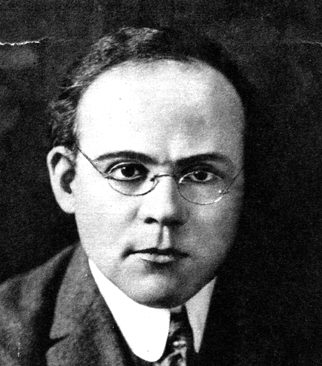
Edgar Lee Masters, 1868-1950 – “Editor Whedon” from Spoon River Anthology


Discover more from Tim Miller

Subscribe to get the latest posts to your email.

Leave a Reply

This site uses Akismet to reduce spam. Learn how your comment data is processed.

#223 – How to write two novels at the same time, with Charles Dickens Human Voices Wake Us

An episode from 1/10/23: Tonight we take a peek into the creative life of Charles Dickens (1812-1870). Through a handful of readings from Claire Tomalin’s biography of Dickens, we see how he was able to juggle, for almost a year, the writing of two novels for simultaneous serial publication. Then, thanks to a letter written by Fyodor Dostoevsky, who visited Dickens in London in 1862, we also hear Dickens admitting that his villains were better reflections of himself than his more lovable and generous characters. We also answer the question: what do David Copperfield and Jane Eyre have in common? Finally, we hear about the chance encounter Dickens had with a young fan in America, who grew up to become a novelist herself.Note: these readings from the life of Dickens were originally the first part of a longer episode, hence the brief mention of the second part, no longer included, and the abrupt ending here. Listeners will forgive these frayed edges. The best way to support the podcast is by leaving a review on Apple or Spotify, sharing it with others, or sending me a note on what you think. You can also order any of my books: Time and the River: From Columbine to the Invention of Fire, Notes from the Grid, To the House of the Sun, The Lonely Young & the Lonely Old, and Bone Antler Stone. I've also edited a handful of books in the S4N Pocket Poems series. I also have a YouTube channel where I share poems and excerpts from these books, mostly as YouTube shorts. Email me at humanvoiceswakeus1@gmail.com.
  1. #223 – How to write two novels at the same time, with Charles Dickens
  2. #222: Seamus Heaney – 10 Essential Poems
  3. #221: Volcanoes, Plagues & the Childhood of a Kabbalist
  4. #220: The working poor and a so-so murder show
  5. #219: When a paragraph changes your life
  6. #218: Poetry to Live By
  7. #217: Voices from 1900-1914
  8. #216: Poets, Prophets, Seeresses & Goddesses from Time & the River
  9. #215: 8 Favorite Poems from "Time and the River"
  10. #214: Two of the Best Poems You've Never Heard of (by William Cullen Bryant)

Discover more from Tim Miller

Subscribe now to keep reading and get access to the full archive.

Continue reading