Come, Madam, come, all rest my powers defy,
Until I labour, I in labour lie.
The foe oft-times having the foe in sight,
Is tir’d with standing though he never fight.
Off with that girdle, like heaven’s Zone glistering,
But a far fairer world encompassing.
Unpin that spangled breastplate which you wear,
That th’eyes of busy fools may be stopped there.
Unlace yourself, for that harmonious chime,
Tells me from you, that now it is bed time.
Off with that happy busk, which I envy,
That still can be, and still can stand so nigh.
Your gown going off, such beauteous state reveals,
As when from flowery meads th’hill’s shadow steals.
Off with that wiry Coronet and shew
The hairy Diadem which on you doth grow:
Now off with those shoes, and then safely tread
In this love’s hallow’d temple, this soft bed.
In such white robes, heaven’s Angels used to be
Received by men; Thou Angel bringst with thee
A heaven like Mahomet’s Paradise; and though
Ill spirits walk in white, we easily know,
By this these Angels from an evil sprite,
Those set our hairs, but these our flesh upright.
Licence my roving hands, and let them go,
Before, behind, between, above, below.
O my America! my new-found-land,
My kingdom, safeliest when with one man mann’d,
My Mine of precious stones, My Empirie,
How blest am I in this discovering thee!
To enter in these bonds, is to be free;
Then where my hand is set, my seal shall be.
Full nakedness! All joys are due to thee,
As souls unbodied, bodies uncloth’d must be,
To taste whole joys. Gems which you women use
Are like Atlanta’s balls, cast in men’s views,
That when a fool’s eye lighteth on a Gem,
His earthly soul may covet theirs, not them.
Like pictures, or like books’ gay coverings made
For lay-men, are all women thus array’d;
Themselves are mystic books, which only we
(Whom their imputed grace will dignify)
Must see reveal’d. Then since that I may know;
As liberally, as to a Midwife, shew
Thy self: cast all, yea, this white linen hence,
There is no penance due to innocence.
To teach thee, I am naked first; why then
What needst thou have more covering than a man.
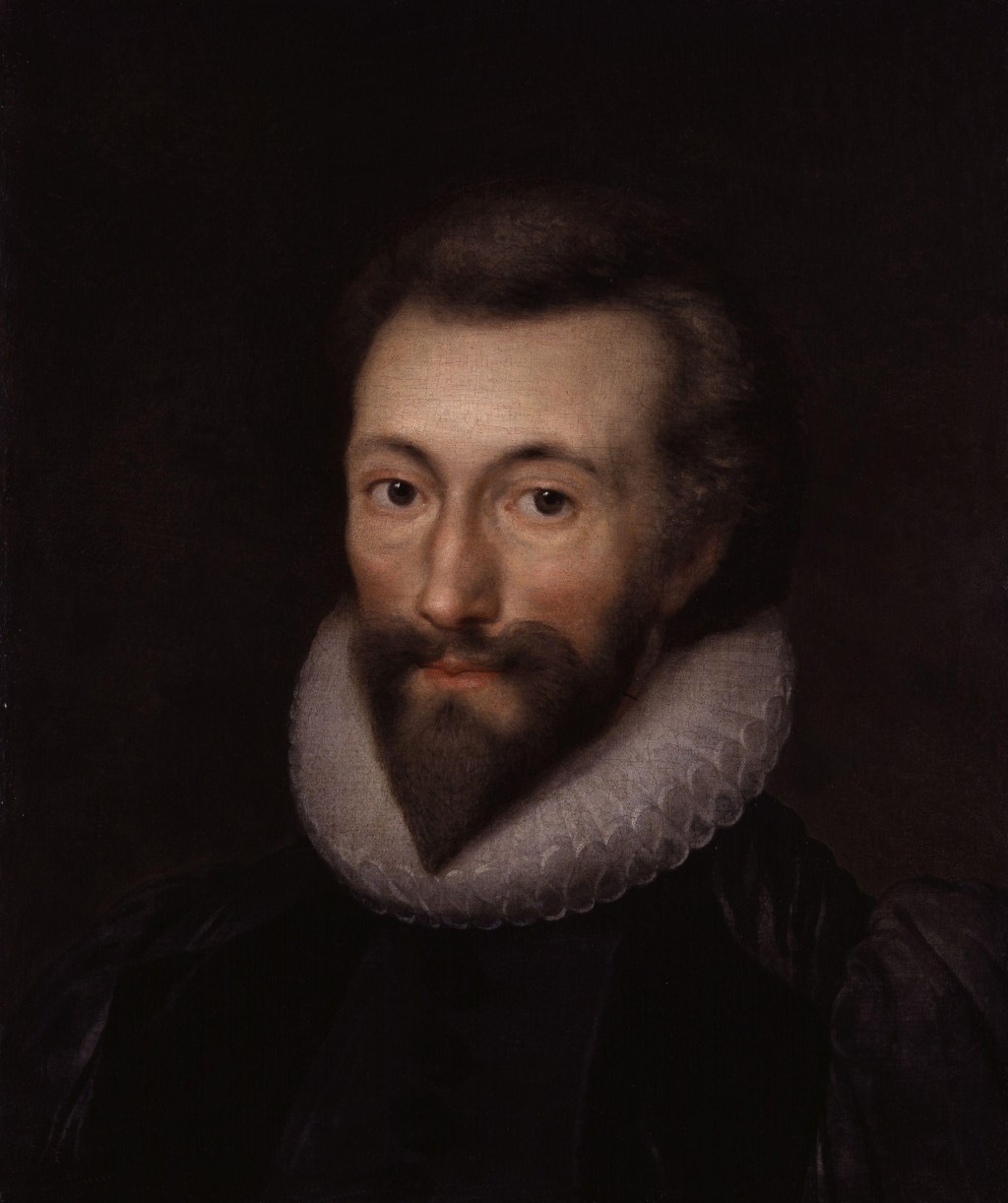
John Donne, 1572-1631 – “Elegy: To his Mistress Going to Bed” from Collected Poetry


Leave a Reply