These are the gardens of the Desert, these
The unshorn fields, boundless and beautiful,
For which the speech of England has no name –
The Prairies. I behold them for the first,
And my heart swells, while the dilated sight
Takes in the encircling vastness. Lo! they stretch,
In airy undulations, far away,
As if the ocean, in his gentlest swell,
Stood still, with all his rounded billows fixed,
And motionless forever. – Motionless? –
No – they are all unchained again. The clouds
Sweep over with their shadows, and, beneath,
The surface rolls and fluctuates to the eye;
Dark hollows seem to glide along and chase
The sunny ridges. Breezes of the South!
Who toss the golden and the flame-like flowers,
And pass the prairie-hawk that, poised on high,
Flaps his broad wings, yet moves not – ye have played
Among the palms of Mexico and vines
Of Texas, and have crisped the limpid brooks
That from the fountains of Sonora glide
Into the calm Pacific – have ye fanned
A nobler or a lovelier scene than this?
Man hath no power in all this glorious work:
The hand that built the firmament hath heaved
And smoothed these verdant swells, and sown their slopes
With herbage, planted them with island groves,
And hedged them round with forests. Fitting floor
For this magnificent temple of the sky –
With flowers whose glory and whose multitude
Rival the constellations! The great heavens
Seem to stoop down upon the scene in love, –
A nearer vault, and of a tenderer blue,
Than that which bends above our eastern hills.

     As o’er the verdant waste I guide my steed,
Among the high rank grass that sweeps his sides
The hollow beating of his footsteps seems
A sacrilegious sound. I think of those
Upon whose rest he tramples. Are they here –
The dead of other days? – and did the dust
Of these fair solitudes once stir with life
And burn with passion? Let the mighty mounds
That overlook the rivers, or that rise
In the dim forest crowded with old oaks,
Answer. A race, that long has passed away,
Built them; – a disciplined and populous race
Heaped, with long toil, the earth, while yet the Greek
Was hewing the Pentelicus to forms
Of symmetry, and rearing on its rock
The glittering Parthenon. These ample fields
Nourished their harvest, here their herds were fed,
When haply by their stalls the bison lowed,
And bowed his maned shoulder to the yoke.
All day this desert murmured with their toils,
Till twilight blushed, and lovers walked, and wooed
In a forgotten language, and old tunes,
From instruments of unremembered form,
Gave the soft winds a voice. The red man came –
The roaming hunter tribes, warlike and fierce,
And the mound-builders vanished from the earth.
The solitude of centuries untold
Has settled where they dwelt. The prairie-wolf
Hunts in their meadows, and his fresh-dug den
Yawns by my path. The gopher mines the ground
Where stood their swarming cities. All is gone;
All – save the piles of earth that hold their bones,
The platforms where they worshipped unknown gods,
The barriers which they builded from the soil
To keep the foe at bay – till o’er the walls
The wild beleaguerers broke, and, one by one,
The strongholds of the plain were forced, and heaped
With corpses. The brown vultures of the wood
Flocked to those vast uncovered sepulchres,
And sat unscared and silent at their feast.
Haply some solitary fugitive,
Lurking in marsh and forest, till the sense
Of desolation and of fear became
Bitterer than death, yielded himself to die.
Man’s better nature triumphed then. Kind words
Welcomed and soothed him; the rude conquerors
Seated the captive with their chiefs; he chose
A bride among their maidens, and at length
Seemed to forget – yet ne’er forgot – the wife
Of his first love, and her sweet little ones,
Butchered, amid their shrieks, with all his race.

     Thus change the forms of being. Thus arise
Races of living things, glorious in strength,
And perish, as the quickening breath of God
Fills them, or is withdrawn. The red man, too,
Has left the blooming wilds he ranged so long,
And, nearer to the Rocky Mountains, sought
A wilder hunting-ground. The beaver builds
No longer by these streams, but far away,
On waters whose blue surface ne’er gave back
The white man’s face – among Missouri’s springs,
And pools whose issues swell the Oregon –
He rears his little Venice. In these plains
The bison feeds no more. Twice twenty leagues
Beyond remotest smoke of hunter’s camp,
Roams the majestic brute, in herds that shake
The earth with thundering steps – yet here I meet
His ancient footprints stamped beside the pool.

     Still this great solitude is quick with life.
Myriads of insects, gaudy as the flowers
They flutter over, gentle quadrupeds,
And birds, that scarce have learned the fear of man,
Are here, and sliding reptiles of the ground,
Startlingly beautiful. The graceful deer
Bounds to the wood at my approach. The bee,
A more adventurous colonist than man,
With whom he came across the eastern deep,
Fills the savannas with his murmurings,
And hides his sweets, as in the golden age,
Within the hollow oak. I listen long
To his domestic hum, and think I hear
The sound of that advancing multitude
Which soon shall fill these deserts. From the ground
Comes up the laugh of children, the soft voice
Of maidens, and the sweet and solemn hymn
Of Sabbath worshippers. The low of herds
Blends with the rustling of the heavy grain
Over the dark brown furrows. All at once
A fresher winds sweeps by, and breaks my dream,
And I am in the wilderness alone.
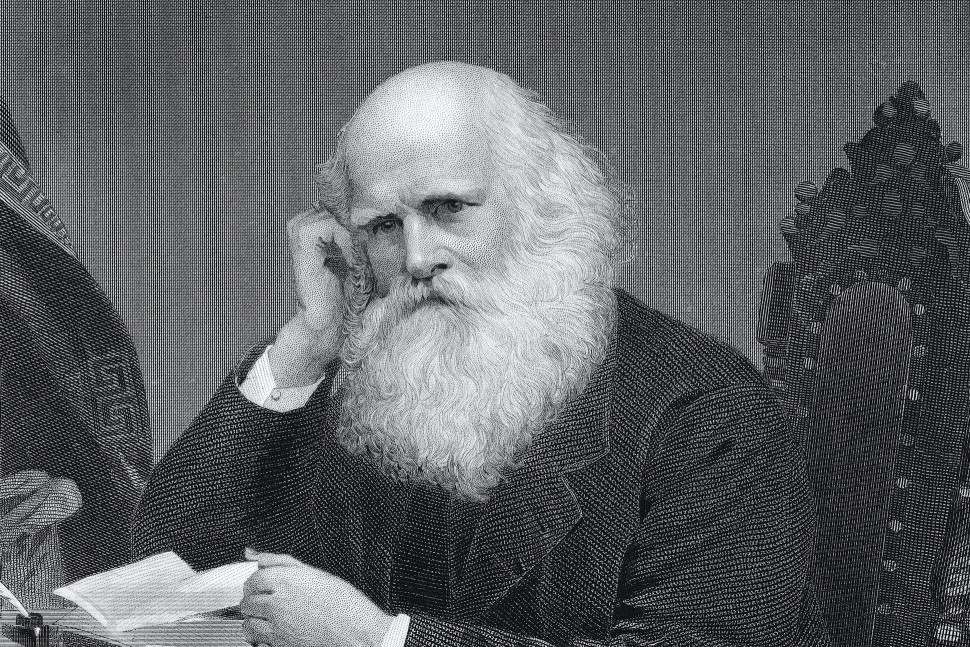
William Cullen Bryant, 1794-1878 – “The Prairies” from American Poetry: The Nineteenth Century, Vol. 1


Leave a Reply