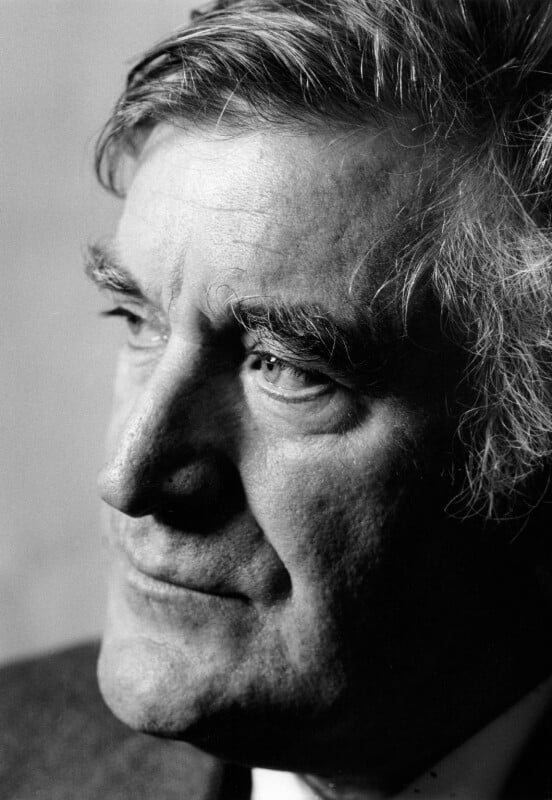
An episode from 5/8/24: Tonight, I read fourteen poems from Ted Hughes’s 1970 collection, Crow. His books Crow, Moortown Diary, Remains of Elmet, and River contain his best poetry, and they are models for any artist in how handle nature, animal life, myth, and autobiography in their work. The poems that read are:

  • A Childish Prank (the audio of Hughes reading the poem comes from here)
  • Crow’s First Lesson
  • Crow Tyrannosaurus
  • Crow & the Birds
  • Crowego
  • Crow Blacker than Ever
  • Crow’s Last Stand
  • Crow & the Sea
  • Fragments of an Ancient Tablet
  • Notes for a Little Play
  • Lovesong
  • Littleblood
  • Crow’s Courtship
  • Crow’s Song about God

This is a revision and complete re-recording of an episode first posted in August of 2021, which included fewer poems. I’ve used the opportunity to also read from Jonathan Bates’s biography of Hughes, Hughes’s later notes to the book, as well as handful of letters he wrote about the collection.

You can support Human Voices Wake Us here, or by ordering any of my books: Notes from the Grid, To the House of the Sun, The Lonely Young & the Lonely Old, and Bone Antler Stone. I’ve also edited a handful of books in the S4N Pocket Poems series.

Email me at humanvoiceswakeus1@gmail.com.


Discover more from Tim Miller

Subscribe to get the latest posts to your email.

2 responses

  1. wonderful, I always loved that original episode

    Liked by 1 person

  2. cheers, I hope the new one is an improvement… anyhow it’s three times longer!

    Like

Leave a Reply

This site uses Akismet to reduce spam. Learn how your comment data is processed.

#213: Van Gogh's Early Years Human Voices Wake Us

An episode from 12/7/22: This week, I am reposting what is perhaps my favorite episode of Human Voices Wake Us, first posted back in late 2022. We enter into the early years of Vincent van Gogh (1853-1890), from his birth in the village of Zundert in the Netherlands, to his time in the Borinage mining region of Belgium. It was there, at the age of twenty-seven—and after years of personal and professional failures—that he hit bottom … and suddenly realized he was an artist.In the first half of the episode, I read from Steven Naifeh and Gregory White Smith’s biography, ⁠⁠Van Gogh: The Life⁠⁠. The second half is devoted to a handful of letters Van Gogh wrote to his brother in 1879 and 1880, where he admits the humiliation of his failures, and then revels in his newfound passion for drawing and painting. The letters can be ⁠⁠found online here⁠⁠.The best way to support the podcast is by leaving a review on Apple or Spotify, sharing it with others, or sending me a note on what you think. You can also order any of my books: Time and the River: From Columbine to the Invention of Fire, due out next year, is now available for preorder. Other books include Notes from the Grid, To the House of the Sun, The Lonely Young & the Lonely Old, and Bone Antler Stone. I've also edited a handful of books in the S4N Pocket Poems series. Email me at humanvoiceswakeus1@gmail.com.
  1. #213: Van Gogh's Early Years
  2. #212: The Most Popular Story in Ancient India
  3. #211: Who Was William Cullen Bryant?
  4. #210: Memories & Legends of William Shakespeare
  5. #209 – Being a Jew in 1900, Being a Jew Now
  6. #208: Bach & God
  7. #207 – Death, the Gods, and Endless Life in Ancient Egypt
  8. #206 – The Discovery of Indo-European Languages – 1876
  9. #205: Learning to Read, c. 2000 BCE
  10. #204: Walt Whitman's "Crossing Brooklyn Ferry," 1856

Discover more from Tim Miller

Subscribe now to keep reading and get access to the full archive.

Continue reading