1
When the world turns completely upside down
You say we’ll emigrate to the Eastern Shore
Aboard a river-boat from Baltimore;
We’ll live among wild peach trees, miles from town,
You’ll wear a coonskin cap, and I a gown
Homespun, dyed butternut’s dark gold color.
Lost, like your lotus-eating ancestor,
We’ll swim in milk and honey till we drown.

The winter will be short, the summer long,
The autumn amber-hued, sunny and hot,
Tasting of cider and of scuppernong;
All seasons sweet, but autumn best of all.
The squirrels in their silver fur will fall
Like falling leaves, like fruit, before your shot.

2
The autumn frosts will lie upon the grass
Like bloom on grapes of purple-brown and gold.
The misted early mornings will be cold;
The little puddles will be roofed with glass.
The sun, which burns from copper into brass,
Melts these at noon, and makes the boys unfold
Their knitted mufflers; full as they can hold
Fat pockets dribble chestnuts as they pass.

Peaches grow wild, and pigs can live in clover;
A barrel of salted herrings lasts a year;
The spring begins before the winter’s over.
By February you may find the skins
Of garter snakes and water moccasins
Dwindled and harsh, dead-white and cloudy-clear.

3
When April pours the colors of a shell
Upon the hills, when every little creek
Is shot with silver from the Chesapeake
In shoals new-minted by the ocean swell,
When strawberries go begging, and the sleek
Blue plums lie open to the blackbird’s beak,
We shall live well – we shall live very well.

The months between the cherries and the peaches
Are brimming cornucopias which spill
Fruits red and purple, somber-bloomed and black;
Then, down rich fields and frosty river beaches
We’ll trample bright persimmons, while you kill
Bronze partridge, speckled quail, and canvasback.

4
Down to the Puritan marrow of my bones
There’s something in this richness that I hate.
I love the look, austere, immaculate,
Of landscapes drawn in pearly monotones.
There’s something in my very blood that owns
Bare hills, cold silver on a sky of slate,
A thread of water, churned to milky spate
Streaming through slanted pastures fenced with stones.

I love those skies, thin blue or snowy gray,
Those fields sparse-planted, rendering meagre sheaves;
That spring, briefer than apple-blossom’s breath,
Summer, so much too beautiful to stay,
Swift autumn, like a bonfire of leaves,
And sleepy winter, like the sleep of death.
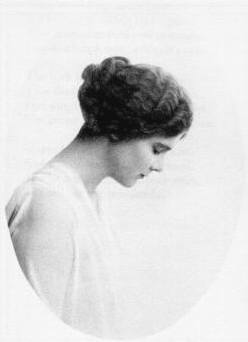
Elinor Wylie, 1885-1928 – “Wild Peaches” from Selected Works


Leave a Reply