Calm is the landscape when the storm has passed,
Brighter the fields, and fresh with fallen rain.
Where gales beat out new colour from the hills
Rivers fly faster, and upon their banks
Birds preen their wings, and irises revive.
Not so the cities burnt alive with fire
Of man’s destruction: when their smoke is spent,
No phoenix rises from the ruined walls.

I ponder now the grief of many rooms.
Was it a dream, that age, when fingers found
A satisfaction sleeping in dumb stone,
When walls were built responding to the touch
In whose high gables, in the lengthening days,
Martins would nest? Though crops, though lives, would fail,
Though friends dispersed, unchanged the walls would stay,
And still those wings return to build in Spring.

Here, where the earth is green, where heaven is true
Opening the windows, touched with earliest dawn,
In the first frost of cool September days,
Chrysanthemum weather, presaging great birth,
Who in his heart could murmur or complain:
“The light we look for is not in this land”?
That light is present, and that distant time
Is always here, continually redeemed.

There is a city we must build with joy
Exactly where the fallen city sleeps.
There is one road through village, town and field,
On whose robust foundation Chaucer dreamed
A ride could wed the opposites in man.
There proud walls may endure, and low walls feed
The imagination if they have a vine
Or shadowy barn made rich with gathered corn.

Great mansions fear from their surrounding trees
The invasion of a wintry desolation
Filling their rooms with leaves. And cottages
Bring the sky down as flickering candles do,
Leaning on their own shadows. I have seen
Vases and polished brass reflect black windows
And draw the ceiling down to their vibrations,
Thick, deep, and white-washed, like a bank of snow.

To live entwined in pastoral loveliness
May rest the eyes, throw pictures on the mind,
But most we need a metaphor of stone
Such as those painters had whose mountain-cities
Cast long, low shadows on the Umbrian hills.
There, in some courtyard on the cobbled stone,
A fountain plays, and through a cherub’s mouth
Ages are linked by water in the sunlight.

All of good faith that fountain may recall,
Woman, musician, boy, or else a scholar
Reading a Latin book. They seem distinct,
And yet are one, because tranquility
Affirms the Judgment. So, in these Welsh hills,
I marvel, waking from a dream of stone,
That such a peace surrounds me, while the city
For which all long has never yet been built.

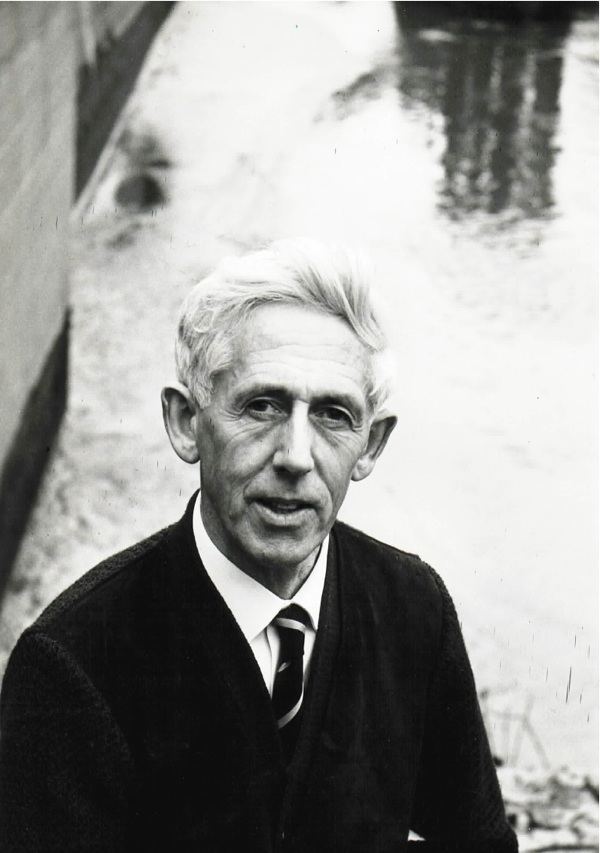
Vernon Watkins, 1906-1967 – “Peace in the Welsh Hills” from New Selected Poems


Discover more from Tim Miller

Subscribe to get the latest posts to your email.

2 responses

  1. Lovely stuff – the influence of his friend, Dylan Thomas, is clear. Living in South Wales as I do, I can vouch for the fact that, while Swansea may no longer burn, it isn’t a great deal better these days (though there are myriad, more prosaic reasons for that).

    Liked by 1 person

  2. I’m never sure in which direction the influence went, with those two. Have you read the book of Letters from DT to VW? …it’s strange, that when I was younger, I gravitated towards DT, now (as if we have to choose), it’s the simmering quiet of VW

    Like

Leave a Reply

This site uses Akismet to reduce spam. Learn how your comment data is processed.

#223 – How to write two novels at the same time, with Charles Dickens Human Voices Wake Us

An episode from 1/10/23: Tonight we take a peek into the creative life of Charles Dickens (1812-1870). Through a handful of readings from Claire Tomalin’s biography of Dickens, we see how he was able to juggle, for almost a year, the writing of two novels for simultaneous serial publication. Then, thanks to a letter written by Fyodor Dostoevsky, who visited Dickens in London in 1862, we also hear Dickens admitting that his villains were better reflections of himself than his more lovable and generous characters. We also answer the question: what do David Copperfield and Jane Eyre have in common? Finally, we hear about the chance encounter Dickens had with a young fan in America, who grew up to become a novelist herself.Note: these readings from the life of Dickens were originally the first part of a longer episode, hence the brief mention of the second part, no longer included, and the abrupt ending here. Listeners will forgive these frayed edges. The best way to support the podcast is by leaving a review on Apple or Spotify, sharing it with others, or sending me a note on what you think. You can also order any of my books: Time and the River: From Columbine to the Invention of Fire, Notes from the Grid, To the House of the Sun, The Lonely Young & the Lonely Old, and Bone Antler Stone. I've also edited a handful of books in the S4N Pocket Poems series. I also have a YouTube channel where I share poems and excerpts from these books, mostly as YouTube shorts. Email me at humanvoiceswakeus1@gmail.com.
  1. #223 – How to write two novels at the same time, with Charles Dickens
  2. #222: Seamus Heaney – 10 Essential Poems
  3. #221: Volcanoes, Plagues & the Childhood of a Kabbalist
  4. #220: The working poor and a so-so murder show
  5. #219: When a paragraph changes your life
  6. #218: Poetry to Live By
  7. #217: Voices from 1900-1914
  8. #216: Poets, Prophets, Seeresses & Goddesses from Time & the River
  9. #215: 8 Favorite Poems from "Time and the River"
  10. #214: Two of the Best Poems You've Never Heard of (by William Cullen Bryant)

Discover more from Tim Miller

Subscribe now to keep reading and get access to the full archive.

Continue reading