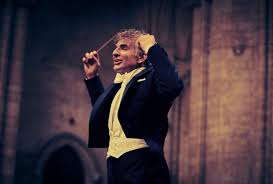
An episode from 12/13/23: There’s a certain lesson I’ve learned from sports figures, poets, and critics, and I was reminded of it while watching Bradley Cooper’s new movie about Leonard Bernstein, Maestro. What does it mean that the attention and opportunities that so many aspiring musicians and conductors dream of, only ever lands on a few people, like Bernstein?

And what does it mean that the earliest dreams of actors—which include being able to portray figures like Bernstein, and to recreate and embody defining moments in their lives—also only ever lands on a few people, like Bradley Cooper? While talking about this, I play an excerpt from a New Yorker interview with Bradley Cooper from last month.

I end the episode with a small question for all of us: considering how easy it is nowadays to find a new book, movie, podcast, or album, has anyone out there developed a disciplined way of saying no, of stopping, of creating time when absolutely nothing of culture can intrude?

You can support Human Voices Wake Us here, or by ordering any of my books: Notes from the Grid, To the House of the Sun, The Lonely Young & the Lonely Old, and Bone Antler Stone.

Email me at humanvoiceswakeus1@gmail.com.

Discover more from Tim Miller

Subscribe to get the latest posts to your email.

Leave a Reply

This site uses Akismet to reduce spam. Learn how your comment data is processed.

#223 – How to write two novels at the same time, with Charles Dickens Human Voices Wake Us

An episode from 1/10/23: Tonight we take a peek into the creative life of Charles Dickens (1812-1870). Through a handful of readings from Claire Tomalin’s biography of Dickens, we see how he was able to juggle, for almost a year, the writing of two novels for simultaneous serial publication. Then, thanks to a letter written by Fyodor Dostoevsky, who visited Dickens in London in 1862, we also hear Dickens admitting that his villains were better reflections of himself than his more lovable and generous characters. We also answer the question: what do David Copperfield and Jane Eyre have in common? Finally, we hear about the chance encounter Dickens had with a young fan in America, who grew up to become a novelist herself.Note: these readings from the life of Dickens were originally the first part of a longer episode, hence the brief mention of the second part, no longer included, and the abrupt ending here. Listeners will forgive these frayed edges. The best way to support the podcast is by leaving a review on Apple or Spotify, sharing it with others, or sending me a note on what you think. You can also order any of my books: Time and the River: From Columbine to the Invention of Fire, Notes from the Grid, To the House of the Sun, The Lonely Young & the Lonely Old, and Bone Antler Stone. I've also edited a handful of books in the S4N Pocket Poems series. I also have a YouTube channel where I share poems and excerpts from these books, mostly as YouTube shorts. Email me at humanvoiceswakeus1@gmail.com.
  1. #223 – How to write two novels at the same time, with Charles Dickens
  2. #222: Seamus Heaney – 10 Essential Poems
  3. #221: Volcanoes, Plagues & the Childhood of a Kabbalist
  4. #220: The working poor and a so-so murder show
  5. #219: When a paragraph changes your life
  6. #218: Poetry to Live By
  7. #217: Voices from 1900-1914
  8. #216: Poets, Prophets, Seeresses & Goddesses from Time & the River
  9. #215: 8 Favorite Poems from "Time and the River"
  10. #214: Two of the Best Poems You've Never Heard of (by William Cullen Bryant)

Discover more from Tim Miller

Subscribe now to keep reading and get access to the full archive.

Continue reading