#209 – Being a Jew in 1900, Being a Jew Now Human Voices Wake Us

An episode from 12/15/25: Tonight, I read from Irving Howe’s World of Our Fathers: The Journey of the East European Jews to America and the Life They Found and Made. In light of the events in Australia yesterday, I take the time not just to talk about what it meant to be a Jewish immigrant to America around the year 1900, but what it means to me to be a Jew right now.The best way to support the podcast is by leaving a review on Apple or Spotify, sharing it with others, or sending me a note on what you think. You can also order any of my books: Time and the River: From Columbine to the Invention of Fire, due out next year, is now available for preorder. Other books include Notes from the Grid, To the House of the Sun, The Lonely Young & the Lonely Old, and Bone Antler Stone. I've also edited a handful of books in the S4N Pocket Poems series.Email me at humanvoiceswakeus1@gmail.com.
  1. #209 – Being a Jew in 1900, Being a Jew Now
  2. #208: Bach & God
  3. #207 – Death, the Gods, and Endless Life in Ancient Egypt
  4. #206 – The Discovery of Indo-European Languages – 1876
  5. #205: Learning to Read, c. 2000 BCE

The oldest book about religion on my shelves is Karen Armstrong’s A History of God. The note inside still says that I read it in the fall of 1996, just after I turned seventeen. I’m lucky that I found Armstrong’s book so early for many reasons, but mostly for the following story she tells, which I have never forgotten.


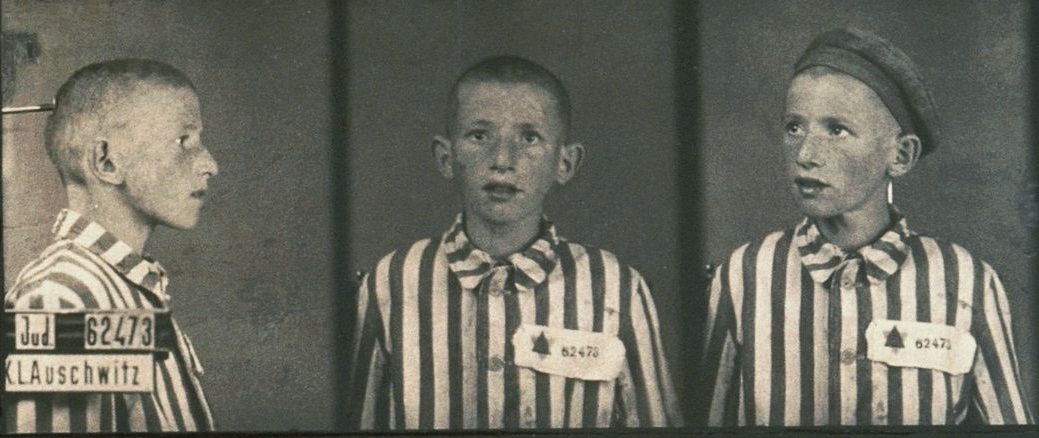
One day the Gestapo hanged a child. Even the SS were disturbed by the prospect of hanging a young boy in front of thousands of spectators. The child who, [Elie] Wiesel recalled, had the face of a “sad-eyed angel,” was silent, lividly pale and almost calm as he ascended the gallows. Behind Wiesel, one of the other prisoners asked: “Where is God? Where is He?” It took the child half an hour to die, while the prisoners were forced to look him in the face. The same man asked again: “Where is God now?” And Wiesel heard a voice within him make this answer: “Where is He? Here He is—He is hanging here on this gallows.”

      Dostoyevsky had said that the death of a single child could make God unacceptable, but even he, no stranger to inhumanity, had not imagined the death of a child under such circumstances. The horror of Auschwitz is a stark challenge to many of the more conventional ideas of God. The remote God of the philosophers, lost in a transcendent apatheia [a Stoical “freedom from emotion”], becomes intolerable. Many Jews can no longer subscribe to the biblical idea of God who manifests himself in history, who, they say with Wiesel, died in Auschwitz. The idea of a personal God, like one of us writ large, is fraught with difficulty. If this God is omnipotent, he could have prevented the Holocaust. If he was unable to stop it, he is impotent and useless; if he could have stopped it and chose not to, he is a monster. Jews are not the only people who believe that the Holocaust put an end to conventional theology.

      Yet it is also true that even in Auschwitz some Jews continued to study the Talmud and observe the traditional festivals, not because they hoped that God would rescue them but because it made sense. There is a story that one day in Auschwitz, a group of Jews put God on trial. They charged him with cruelty and betrayal. Like Job, they found no consolation in the usual answers to the problem of evil and suffering in the midst of this current obscenity. They could find no excuse for God, no extenuating circumstances, so they found him guilty and, presumably, worthy of death. The Rabbi pronounced the verdict. Then he looked up and said that the trial was over: it was time for the evening prayer.

      – Karen Armstrong, A History of God: The 4000-Year Quest of Judaism, Christianity and Islam, 375-376


Discover more from Tim Miller

Subscribe to get the latest posts to your email.

#209 – Being a Jew in 1900, Being a Jew Now Human Voices Wake Us

An episode from 12/15/25: Tonight, I read from Irving Howe’s World of Our Fathers: The Journey of the East European Jews to America and the Life They Found and Made. In light of the events in Australia yesterday, I take the time not just to talk about what it meant to be a Jewish immigrant to America around the year 1900, but what it means to me to be a Jew right now.The best way to support the podcast is by leaving a review on Apple or Spotify, sharing it with others, or sending me a note on what you think. You can also order any of my books: Time and the River: From Columbine to the Invention of Fire, due out next year, is now available for preorder. Other books include Notes from the Grid, To the House of the Sun, The Lonely Young & the Lonely Old, and Bone Antler Stone. I've also edited a handful of books in the S4N Pocket Poems series.Email me at humanvoiceswakeus1@gmail.com.
  1. #209 – Being a Jew in 1900, Being a Jew Now
  2. #208: Bach & God
  3. #207 – Death, the Gods, and Endless Life in Ancient Egypt
  4. #206 – The Discovery of Indo-European Languages – 1876
  5. #205: Learning to Read, c. 2000 BCE
  6. #204: Walt Whitman's "Crossing Brooklyn Ferry," 1856
  7. #203: Bruce Springsteen Talks About "Nebraska" – 1984
  8. #202 – A Death at Sea, 1834
  9. #201 – Gillian Anderson, & What Women Want, 2024
  10. #200: The Last Days of Walter Benjamin, 1940

Discover more from Tim Miller

Subscribe now to keep reading and get access to the full archive.

Continue reading