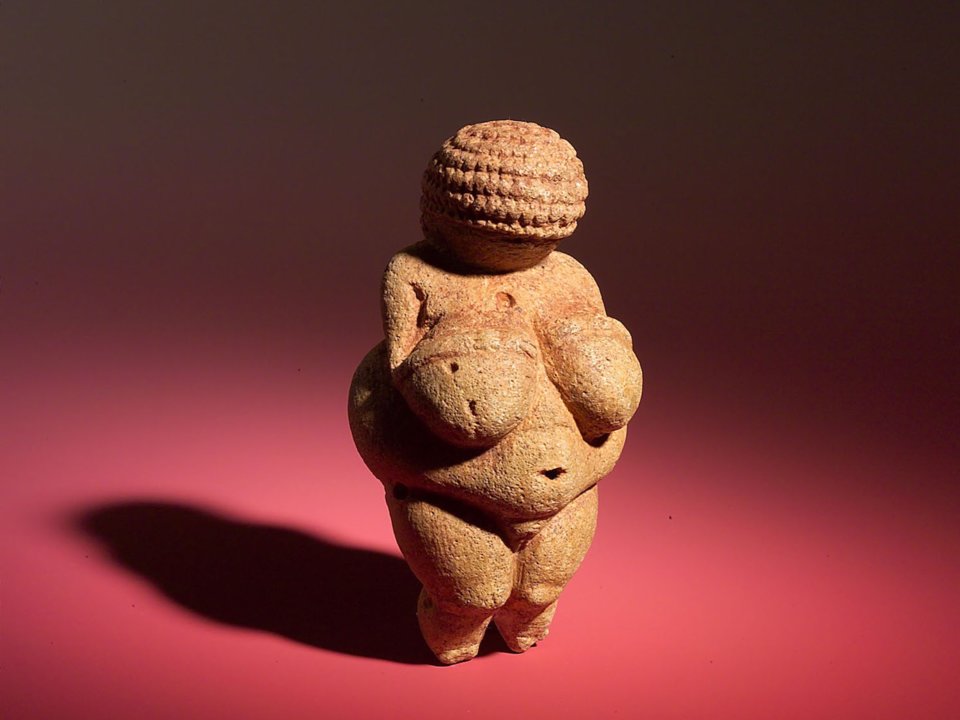
Here are two of my favorite poems from Bone Antler Stone: one on the famous ice age “Venus” figurines from 20-30,000 years ago, and another on a shipwreck from 1300 BC. You can order the entire collection here, or find more poems from the book here.
 Female Figurines
for Evie
Hum the words with me and you might understand:
mammoth ivory, hematite, limestone,
black jet, soapstone, antler and fired clay –
all of these become our bodies because
our bodies are the place of becoming.
They would not emphasize our hips and breasts
or underline the low triangled cleft,
and would not know to rhyme the bison horn
with the horned moon and our monthly flesh
without the genius our nine months gives them
in our seething, essential, swelling dark.
Feast and wear and build with bone, skin and sinew,
but by taking the time to make us
in the only way they can approximate –
hand-held bodies mostly handless, mostly
faceless, mostly propped up for gazing –
they make a simple bottomless mystery
of our bodies and the earth, the round year,
the rounded belly and the circled life.
Since they will never acquiesce to ours
they will worship strength and others like them
and will build to forget that they aren’t it.
But sing the words with me and you might understand:
Lespugue, Laussel, Hohle Fels and Willendorf,
Brassempouy, Dolní Věstonice
and Gönnersdorf – we’ve always been here.
The Uluburun Shipwreck
The cedar ship sank off the coast of Turkey
with pottery from Cyprus and jewelry
from Egypt and Mesopotamia,
with Baltic amber and African ivory,
with ingots and eggshells and colored glass and
a bronze goddess with gold-covered head and hands,
with sickles and axes and awls and a
handful of weights in the shape of a calf
or a sphinx, a duck or a frog, with
figs and almonds and cumin, with fish hooks
and a writing board perhaps to tally
up the whole – but the Mediterranean
swallowed the cargo down into the blue
on its way to Greece from Syria
and sank with someone’s expected riches,
its crew drowned amid fishing gear and tools
wondering how much their bones would bring beside
electrum and turtle shells and scarabs,
their limbs flailing in protest as they plunged
while their shipment calmly complied to sink,
indifferent to surface light or to deep dark,
indifferent to highest shelf or to sea floor,
a storage jar of glass beads battered
by blind hands beating the underwater.
Turkey, 1300 BC